

Measuring Social Impact in Community Projects
When a community project ends, it's tempting to count what was built: one staircase, two classrooms, a dozen homes. Those numbers matter, but they don't tell the whole story. Did families reach school or the clinic more safely? Did the community keep using and maintaining what was built? Those are the questions behind measuring social impact.
In this article, you will learn the difference between outputs and outcomes, how a simple logic model can help organize impact measurement, which methods community projects commonly use, and why residents' own voices should be at the center of any honest evaluation of a project.
What measuring social impact really means
Social impact is the change a project creates in people's lives and communities. Measuring it means collecting evidence about that change, not just about the activities that happened.
Outputs vs outcomes
The most common mistake is confusing outputs with outcomes. The U.S. Administration for Community Living's logic model guide separates the two: outputs are the direct products of a program's activities, while outcomes are the changes in people's behavior, knowledge, skills or circumstances that follow.
| Output | Possible outcome |
|---|---|
| A staircase is built | Residents report safer, faster trips to school and work |
| Classrooms are renovated | Teachers and students describe better learning conditions |
| A greenhouse is completed | A family grows more of its own food over time |
Why it matters
Measuring impact helps organizations learn what works, adjust projects and stay accountable to the communities they serve. It also protects against a common risk in development work: projects that look good on paper but don't meet real needs. Our article on the pitfalls of international development explores that risk.
A simple framework: the logic model
A logic model is a visual way to connect what a project invests to the change it hopes to create. The same ACL guide describes it as a visual, systematic way to show how resources and activities relate to the results a program aims for.
The basic parts
- Inputs: human, financial, organizational and community resources
- Activities: what the project does with those resources
- Outputs: the direct products of the activities
- Outcomes: the changes in people's lives that follow
Building a logic model before a project starts forces a team to state its assumptions. If the goal is safer access to a clinic, the model makes it clear that a staircase is the output and safer access is the outcome to check later.
Methods for measuring social impact in community projects
No single method captures everything. Most projects combine several.
Baseline and follow-up
Collect information before the project and again afterward, so you can compare. Even simple questions asked consistently can show change.
Surveys and interviews
Short surveys work for numbers. Interviews and conversations capture experiences and details that numbers miss.
Observation
Seeing how a space is used, who uses it and when, can reveal outcomes residents might not mention.
Community feedback
Residents are the best judges of whether a project improved their daily lives. Listening sessions and community meetings put their perspective first. Our article on the impact of volunteer construction work in Latin America looks at what lasting change requires.
Be honest about limits
Many factors shape people's lives at once, so it's rarely possible to credit a change to one project alone. Good impact reports say what the evidence shows and what it doesn't.
Putting the community at the center
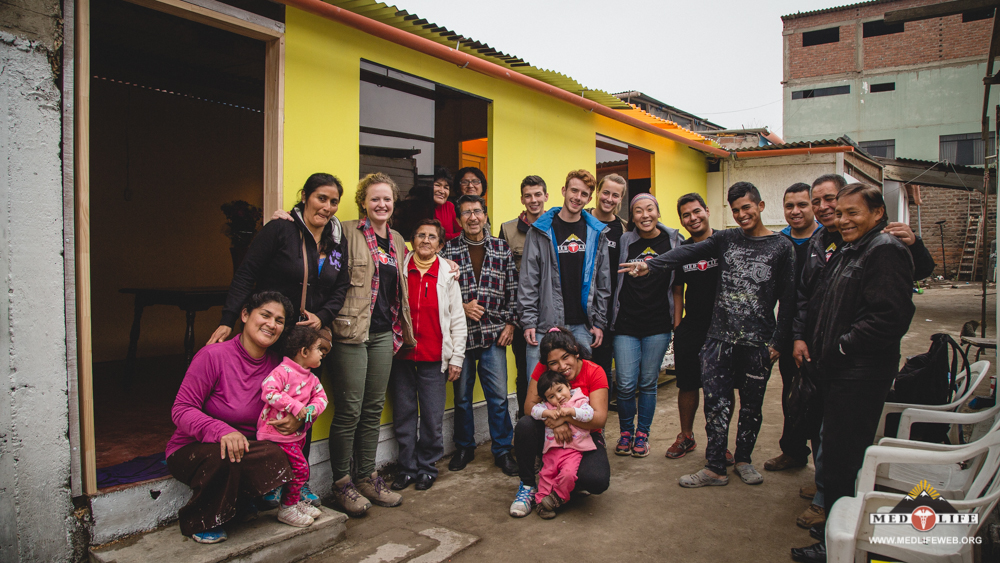
Impact measurement works best when the community helps define what success looks like. Safe Homes Movement is the MEDLIFE program that makes these projects possible, and it follows a 50/50 model: residents identify the need and build alongside student volunteers, while local architects, engineers and community leaders guide the work. That shared ownership also shapes how results are understood.
On the development service learning trip, students in Lima, Cusco and Tena see this up close. Before building, they learn why the community chose the project. Depending on the project stage when they arrive, some groups also take part in an inauguration and hear from residents about what the project means to them. An inauguration is a milestone, though, not a measure of impact: real outcomes show up over months and years. You can also read how volunteer construction projects create impact in Ecuador.
Learn to see beyond the output
Measuring social impact is about asking what changed for people, not just what was built.
Fill out the form to get dates, eligibility details and next steps for the Development Service Learning Trip.
Frequently asked questions
What is the difference between outputs and outcomes?
Outputs are the direct products of a project's activities, like a staircase or a renovated classroom. Outcomes are the changes in people's lives that follow, such as safer access or better learning conditions.
What is a logic model?
A logic model is a visual tool that connects a project's inputs and activities to its outputs and outcomes, helping teams plan and evaluate their work.
How can communities be involved in measuring social impact?
Communities can help define what success means, share feedback in listening sessions and interviews, and review results. Their perspective is essential for understanding whether a project made a real difference.