
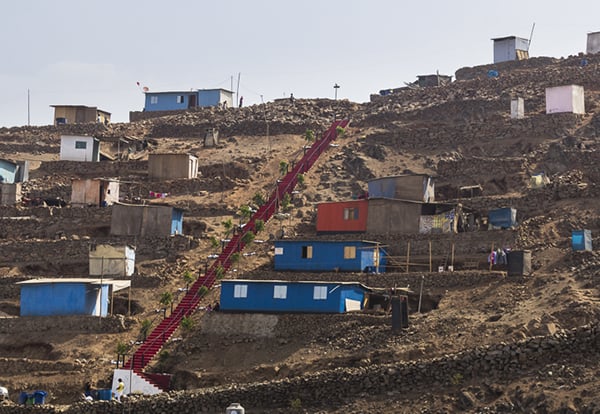
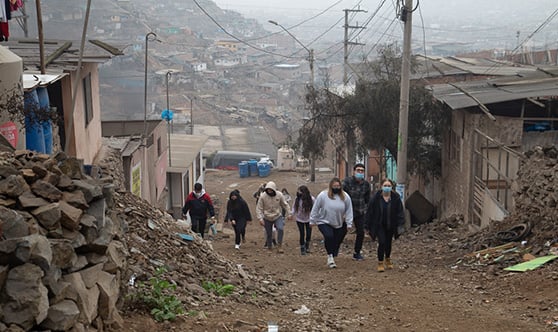
In many hillside neighborhoods on the edges of Lima, the hardest part of seeing a doctor is the walk down. When the only route to the main road is a loose dirt slope, every trip to a clinic, school or market carries a risk of falling. That is why we think about infrastructure and health as one conversation.
In this article, you will learn:
- How missing infrastructure affects health in underserved communities
- Why a concrete staircase can work as a practical health intervention
- What engineering and architecture students learn when they build one alongside local professionals and community members
How infrastructure and health are connected
Public health experts talk about the social determinants of health: the conditions where people live, work and move that shape wellbeing long before anyone reaches a doctor. Physical infrastructure is one of the most visible. In hillside communities, it affects health in three main ways.
1. Access: care you can’t reach doesn’t help
A health post can be open and staffed and still be out of reach. The UN Secretary-General’s High-Level Advisory Group on Sustainable Transport describes mobility as a means to reach jobs, education and the services that support healthy lives. Sustainable mobility frameworks also stress equity: access should not depend on income or location.
On a steep hillside with no safe path, these groups face the hardest climb:
- Older adults and people with limited mobility
- People who are sick or recovering
- Parents carrying small children
When the journey feels dangerous, people may postpone care until a manageable problem becomes serious.
2. Safety: unsafe terrain is a daily injury risk
Many homes in Lima’s human settlements were built by families on rocky, unstable hillsides, often with reed mats or plywood. Without stairs or railings, everyday tasks become fall risks:
- Carrying water or groceries uphill
- Walking children to school
- Moving around after dark or when paths are wet
Seasonal events make this worse. You can read more about how El Niño affects Lima’s settlements and why slope stability matters there.
3. Legal recognition: the path to basic services
Infrastructure also has a legal side. In communities like 2 de Diciembre, the chain works like this:
Staircase → supports land title efforts → land titles are often required for public water and electricity → better sanitation and safer homes
Health is also mental. Living with constant physical risk adds stress, a theme we explore in our article on the psychological impact of safe housing.
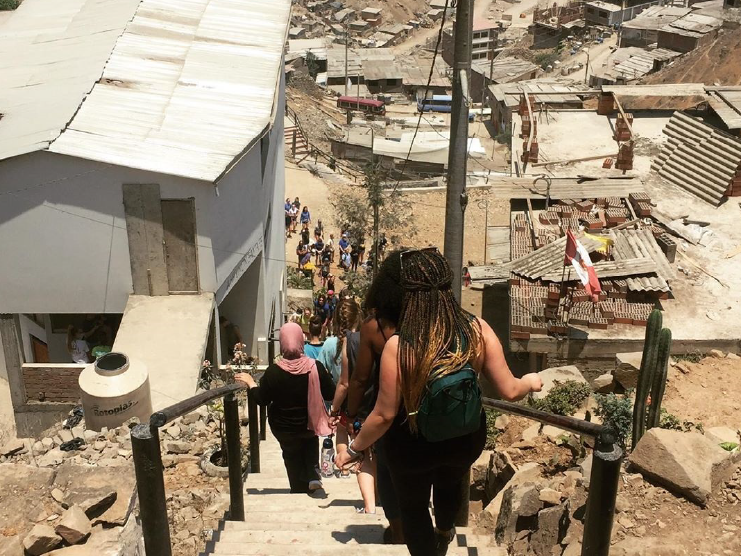
Staircase construction in Lima: the 2 de Diciembre project
The 2 de Diciembre staircase is a clear example of infrastructure and health working together.
Who built it: a 50/50 partnership
| Partner | Role |
|---|---|
| Community residents | Worked on site and know where people actually walk and which homes need connecting |
| Local architects and engineers | Led the technical work and know the terrain |
| Student volunteers | Joined from universities across the United States to mix cement, lay bricks and install handrails |
What changed for the community
| Before | After |
|---|---|
| Trips to school, work or the clinic meant crossing dangerous slopes, especially in rainy weather | Children have a safer route to school |
| Reaching health services was difficult and risky | Families can reach health services more easily |
| Elderly residents risked injury just to leave home | Elderly residents and people with limited mobility can move safely |
No new clinic was built, yet reaching care became safer for the whole neighborhood. That is why we treat a staircase as a healthcare intervention: it removes a physical barrier between people and services that already exist.
What engineering and architecture students learn on site
For students in civil engineering, architecture or urban development, a staircase project turns classroom concepts into real decisions:
- Building on a slope: seeing how terrain shapes every construction choice
- Materials handling: working hands-on with cement, bricks and handrails
- Project sequencing: organizing tasks across several build days
- Designing for people: thinking about users with different physical abilities
- Teamwork across cultures: collaborating with local professionals and residents
What a week on the Development Service Learning Trip looks like
- Orientation: what to expect for the week and safety precautions.
- Reality Tour: a visit to the communities where Safe Homes works, including a look at the gap between Peru’s public health system and low-income families.
- Build days: travel to the community, a brief training session, then on-site work until early afternoon.
- Inauguration: the project closes with a celebration alongside the community.
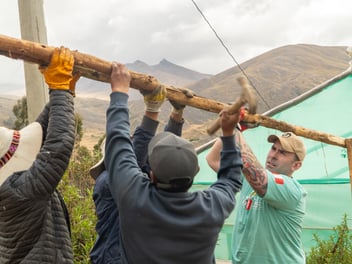
The program also runs in Cusco, Peru, and Tena, Ecuador, where projects can include greenhouses, home construction and other community infrastructure. Read how students gain real-world experience with Safe Homes, or explore our development service learning trip options.
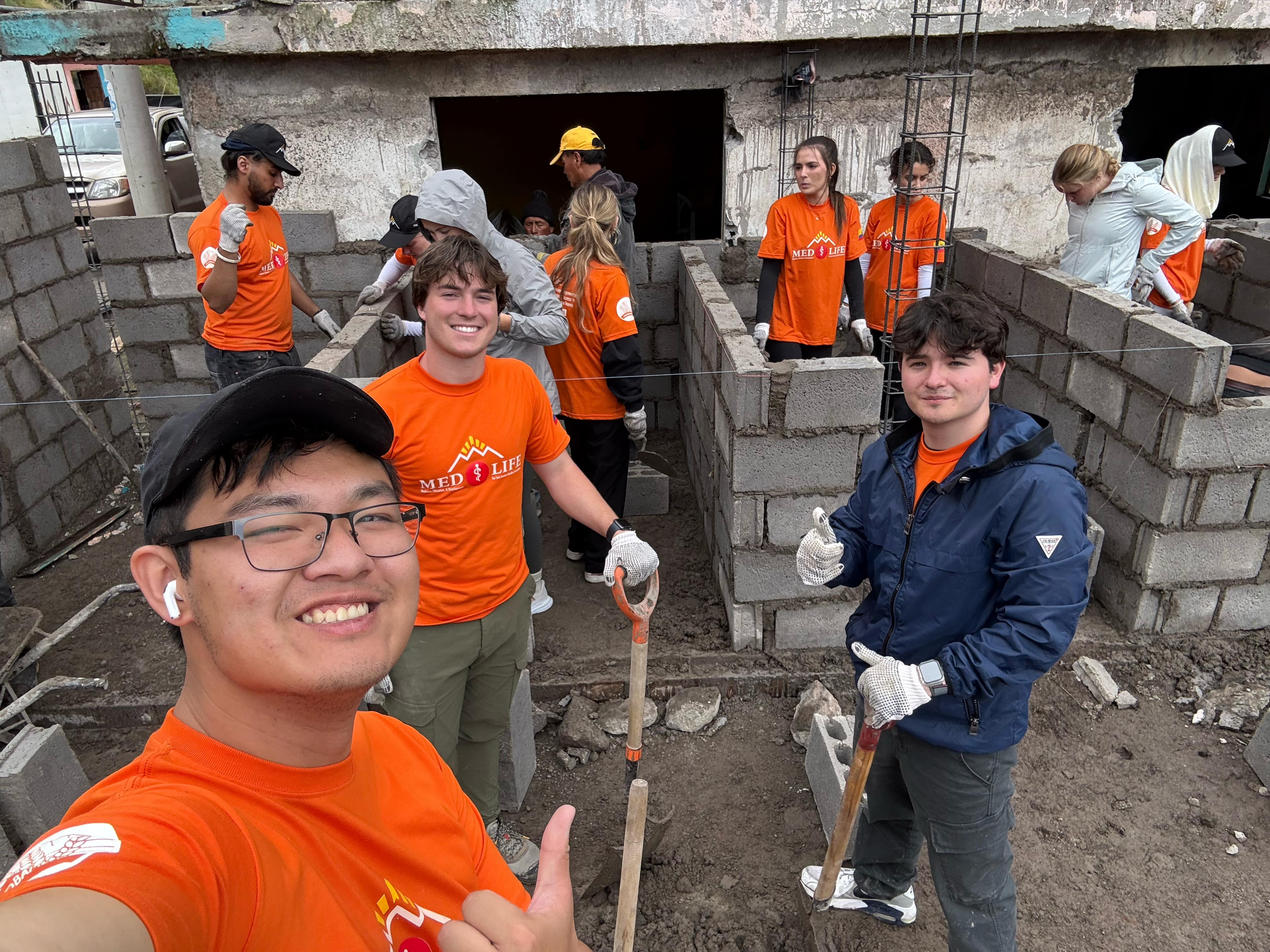
Help build access, one step at a time
On a hillside, the link between infrastructure and health is easy to see: fewer risky trips and easier access to care.
If you are a student interested in engineering, architecture or community development, or an educator looking for a program with real technical depth, fill out the form to get more information about the Development Service Learning Trip.
You will work alongside local professionals and communities in Lima, Cusco or Tena.
To learn more about how you can get involved, check out our Safe Homes Movement brochure. And remember, for less than one coffee a month, you can make an impact in low-income communities by becoming a monthly donor and directly assisting communities in need.
.jpg?width=352&name=44c8abbd-95c9-4ea8-9af1-3f4ad548aa81%20(1).jpg)