

What Is Geotechnical Engineering? Lessons From Lima
Before a single brick goes up, someone has to understand the ground. Is it solid rock, loose sand or soft clay? Will it hold the weight of a home? What happens when it rains, or when the earth shakes? Those questions sit at the heart of a field many students have never heard of. So, what is geotechnical engineering, and why does it matter so much on a steep hillside?
Geotechnical engineering is the branch of civil engineering that studies how soil and rock behave and how they interact with structures. In this article, you will learn what geotechnical engineers do, the problems they solve, why hillside communities around Lima, Peru, are a powerful place to understand the field, and how students can see this work in person.
What is geotechnical engineering?
Every structure ultimately rests on the ground. Geotechnical engineers make sure that ground can support it safely.
What geotechnical engineers study
- Soil and rock properties: how strong, dense or loose the ground is
- Foundations: how buildings and structures transfer their weight into the ground
- Slopes: whether a hillside is stable or at risk of sliding
- Retaining structures: walls that hold back soil on uneven terrain
- Water in the ground: how rain and drainage change soil behavior
What a geotechnical engineer does
A geotechnical engineer investigates a site, often by testing soil samples and studying the terrain. They then recommend foundation types, slope solutions or retaining structures, and work with structural engineers and architects so the design fits the ground beneath it. During construction, they may check that excavation and foundations match what was planned.
Geotechnical engineering on Lima's hillsides
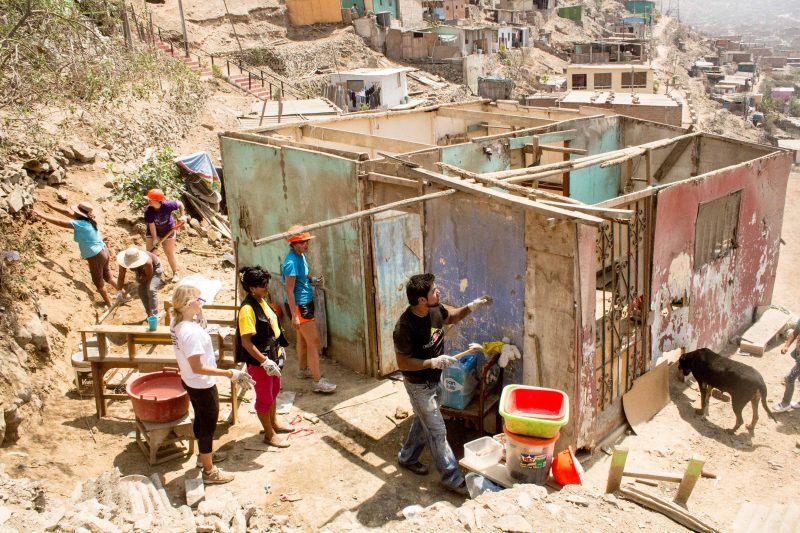
Lima offers a clear example of why geotechnical engineering matters. Over the past decades, families moving to the capital built homes on the steep, rocky hillsides around the city, often on loose sand and unstable rock and usually without technical support.
Ground that moves
Peru sits in a seismically active region, and El Niño years can bring heavy rain to a city that rarely sees it. When water soaks into loose slopes, the risk of slides increases. Our article on El Niño in Lima's settlements explains how these events affect hillside communities.
Infrastructure that works with the slope
In these neighborhoods, geotechnical thinking shapes everyday infrastructure:
| Challenge | Infrastructure response | Geotechnical question |
|---|---|---|
| Steep, unsafe footpaths | Concrete staircases | Where can the stairs sit on stable ground? |
| Loose soil above homes | Retaining walls | How much soil pressure must the wall resist? |
| Homes on uneven ground | Better foundations | What can the ground safely support? |
These projects connect families to schools, clinics and markets, and they help hold the hillside in place. You can learn more about how these neighborhoods formed in our guide to human settlements in Latin America.
Why students should explore geotechnical engineering
Geotechnical engineering is a good fit for students who like a mix of science, problem-solving and fieldwork. It combines geology, physics and engineering design, and much of the work happens outdoors, reading real terrain.
Skills the field builds
- Observation: noticing cracks, drainage patterns and signs of movement
- Analysis: turning soil data into design decisions
- Collaboration: working with structural engineers, architects and builders
- Communication: explaining risks clearly to clients and communities
Seeing it in the field
A hillside build shows geotechnical engineering in action better than any diagram. On the development service learning trip with Safe Homes Movement, powered by MEDLIFE, high school and college students join community projects in Lima, Cusco and Tena during summer, winter and spring sessions.
In Lima, projects such as staircases and retaining walls are built on exactly the kind of terrain geotechnical engineers study. Local architects and engineers lead the design and supervise construction, while residents and students work side by side. Every project follows a 50/50 model: the community identifies the need and works on site, and local professionals provide the technical leadership. Students see firsthand how the ground shapes every decision.
Learn from the ground up
Geotechnical engineering starts where every structure starts: with the ground beneath it. Seeing that ground on a real hillside, alongside the engineers and families who build there, makes the field come alive.
Fill out the form to get dates, eligibility details and next steps for the Development Service Learning Trip.
Frequently asked questions
What is geotechnical engineering?
Geotechnical engineering is the branch of civil engineering that studies soil and rock and how they interact with structures, including foundations, slopes and retaining walls.
What does a geotechnical engineer do?
A geotechnical engineer investigates site conditions, evaluates soil and rock, and recommends safe foundations, slope solutions or retaining structures for a project.
Is geotechnical engineering a good career for students who like the outdoors?
Yes. Geotechnical engineering often involves site visits and fieldwork, combined with analysis and design work in the office.