

What Does a Structural Engineer Do? A Student Guide
Every building, bridge and staircase is quietly carrying weight. People walk on it, wind pushes against it, the ground can shake beneath it, and it still has to stand. Making sure that happens is the job of a structural engineer. So, what does a structural engineer do day to day, and how is it different from other engineering roles?
In short, structural engineers analyze and design the parts of a structure that hold it up, from foundations and columns to beams, walls and slabs. In this article, you will learn what structural engineers focus on, how their work fits into a construction project, which skills the field requires, and how high school and college students can see structural engineering in action on real community projects before choosing a path.
What does a structural engineer do on a project?
Structural engineering is a specialty within civil engineering. While a civil engineer might work on roads, water systems or site planning, a structural engineer focuses on one central question: will this structure safely carry the loads it will face over its lifetime?
Understanding loads
Every structure deals with different kinds of forces:
- Dead loads: the weight of the structure itself
- Live loads: people, furniture, vehicles and anything that moves or changes
- Environmental loads: wind, rain, soil pressure and earthquakes
Structural engineers study how these forces travel through a building or structure and into the ground.
Designing the structural system
Once the loads are understood, the engineer selects and sizes the elements that will carry them. That includes choosing materials, deciding how elements connect and checking the design against local building codes. The work often happens alongside architects, who shape how the space looks and works for people.
Checking the work on site
Structural engineers don't only work at a desk. During construction, they review progress, answer questions from builders and confirm that what's being built matches the design. When site conditions change, they decide how to adjust safely.
Where structural engineers work
Structural engineers work on a wide range of projects:
| Type of project | What the structural engineer focuses on |
|---|---|
| Homes and housing | Walls, floors and roofs that stay safe over time |
| Schools and public buildings | Spaces that hold many people at once |
| Bridges and transportation | Long spans and heavy, moving loads |
| Hillside infrastructure | Staircases and walls on steep, uneven ground |
| Existing buildings | Assessing safety and planning repairs |
In earthquake-prone regions like the Pacific coast of South America, structural design is especially important. Our article on engineers building resilience in South America looks at how engineers respond to earthquakes and other natural hazards.
Structural engineering in community projects
In many communities, structural decisions have to work with tight budgets, local materials and difficult terrain. Around Lima, Peru, many homes sit on steep, rocky hillsides, and families often build without technical support. Structural engineering in these settings is about practical, durable solutions that the community can build and maintain.
Innovation also matters. Our article on sustainable energy projects in Peru shows how engineers in the region combine structural thinking with solutions for cold and climate.
Skills you need to become a structural engineer
- Strong math and physics: the foundation for analyzing forces and materials
- Attention to detail: small errors can have big consequences
- Software skills: analysis and modeling tools are part of daily work
- Communication: explaining technical decisions to architects, builders and clients
- Field judgment: recognizing when real conditions don't match the plan
Most structural engineers earn a degree in civil or structural engineering and later pursue professional licensure. Requirements vary by country and state, so it's worth checking how a program connects to licensure where you plan to work.
How students can see structural engineering in action
Textbook diagrams can only show so much. Watching a structure being built, and helping build it, makes concepts like load paths and foundations much easier to understand.
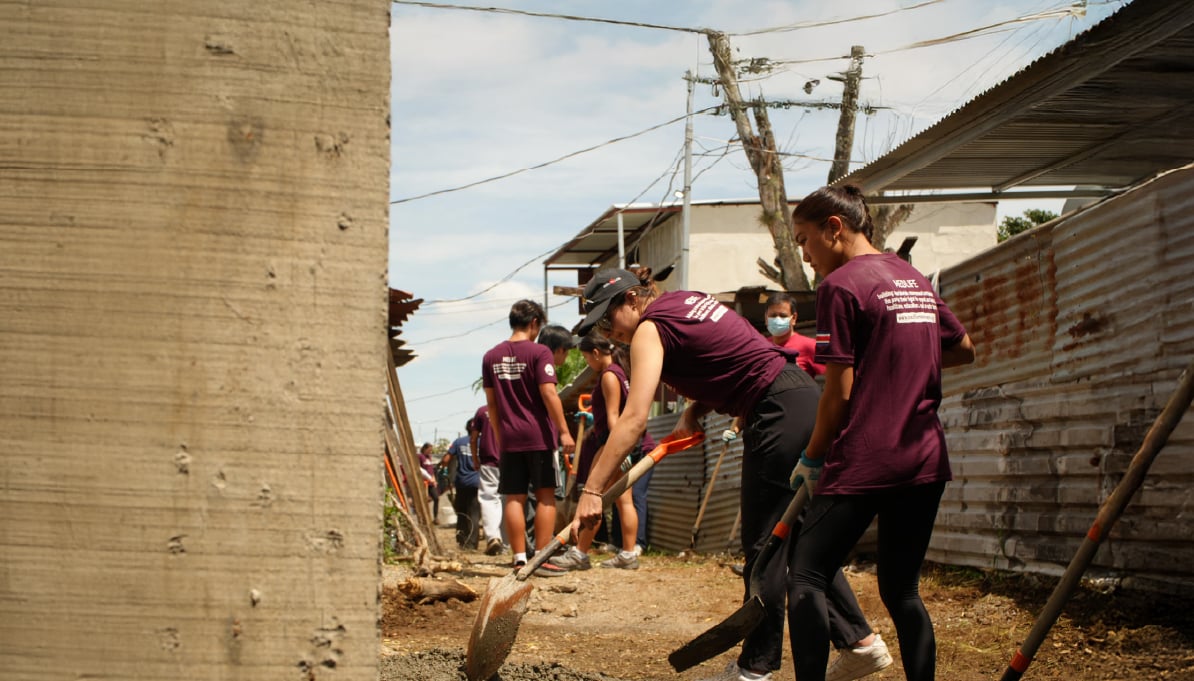
On the development service learning trip with Safe Homes Movement, powered by MEDLIFE, high school and college students join community infrastructure projects in Lima, Cusco and Tena during summer, winter and spring sessions. Projects include staircases, retaining walls, greenhouses and home construction. Local architects and engineers lead the design and supervise every build, while residents and students work side by side on tasks like mixing cement and laying bricks.
Every project follows a 50/50 model: the community identifies the need and works on site, and local professionals provide the technical leadership. For students curious about structural engineering, it's a chance to see how design decisions hold up on real ground.
See structures take shape
Understanding what a structural engineer does is easier when you watch a structure rise from the ground up, alongside the professionals and community members who build it.
Fill out the form to get dates, eligibility details and next steps for the Development Service Learning Trip.
Frequently asked questions
What does a structural engineer do?
A structural engineer analyzes and designs the parts of a structure that carry loads, such as foundations, columns, beams and walls, to make sure buildings and infrastructure stay safe and stable.
Is structural engineering part of civil engineering?
Yes. Structural engineering is usually considered a specialty within civil engineering, focused on the strength and stability of structures.
How can high school students explore structural engineering?
Students can take advanced math and physics, join engineering clubs or design challenges, and volunteer on construction projects supervised by licensed professionals.