

What Does a Geologist Do? Careers in Earth Science
Before anyone builds a staircase on a hillside, a school on loose soil or a road through the mountains, someone needs to understand the ground itself. What is it made of? How does water move through it? Has it slid before, and could it slide again? Those are a geologist's questions. If you're asking what does a geologist do, the answer reaches far beyond rocks in a museum: geologists help decide where and how it's safe to build.
For students interested in engineering, environmental science or community development, geology is the starting point of almost every project. In this article, you will learn what geologists do, how engineering geology connects to slopes and foundations, what education the career usually requires, and how students can see earth science at work in hillside communities in Peru.
What does a geologist do? The core of the job
The U.S. Bureau of Labor Statistics (BLS) sums it up simply: geoscientists "study the physical aspects of the Earth."
Field work
According to BLS, geoscientists plan and carry out field studies, visiting locations to collect samples and conduct surveys. That can mean hiking a slope, logging soil layers or mapping rock outcrops.
Lab work and analysis
Back from the field, geoscientists run lab tests, analyze data, create geologic maps and charts, and write reports for clients and colleagues.
Different specialties
BLS lists several types of geoscientists, including environmental geologists, who study how human activity affects air, soil and water, as well as seismologists, oceanographers and others.
| Specialty | Focus | Connection to communities |
|---|---|---|
| Environmental geology | Human impact on soil, water and air | Water quality and land use |
| Seismology | Earthquakes and ground shaking | Safer construction in seismic zones |
| Engineering geology | Ground conditions for construction | Slopes, foundations and site safety |
Engineering geology: slopes, foundations and safety
Engineering geology is the branch most directly tied to construction. The Association of Environmental & Engineering Geologists (AEG) explains that engineering geologists provide critical information on soil, rock and groundwater conditions for planning projects.
Reading landslide risk
AEG notes that engineering geologists assess where landslides have moved in the past or could occur, and help identify mitigation measures. That doesn't mean every slide can be prevented: the goal is to reduce risk. AEG's overview of landslides also explains how water saturation can make slopes unstable.
Supporting stable foundations
Every structure needs stable ground. Engineering geologists work alongside geotechnical and civil engineers so that foundations, retaining structures and drainage fit the actual conditions of a site.
Why it matters in Lima
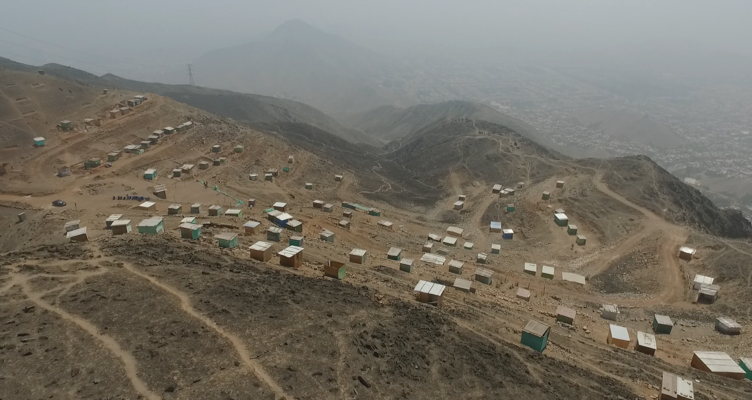
Many neighborhoods around Lima sit on steep hillsides, where ground conditions shape how safely homes, paths and walls can be built. Our article on El Niño in Lima's settlements explains how El Niño events can affect families. You can also read how engineers building resilience across South America respond to earthquakes and floods.
Education and licensing for geologists
BLS reports that geoscientists typically need a bachelor's degree to enter the occupation, often in geoscience or a related field, and that some positions prefer a master's or doctoral degree.
BLS also notes that most states require licensing for geologists who offer services to the public. Requirements vary by state but typically include education, experience and a passing exam score, so students should check with the licensing board where they plan to work.
Useful skills include field observation, mapping, data analysis and clear writing. Geologists also work closely with engineers, planners and communities, so communication matters as much as technical knowledge.
How students can see geology in action
Ground conditions shape every decision on a hillside project. On projects made possible through Safe Homes Movement, powered by MEDLIFE, communities build alongside student volunteers, local architects and engineers lead design and supervise construction, and community leaders guide volunteers throughout. Students see why a staircase follows a certain path, why drainage comes first and why a retaining structure might be needed before anything else.
On the development service learning trip, high school and college students join projects in Lima, Cusco and Tena during summer, winter or spring. Over four to five days of supervised field work, they see how the ground itself guides what gets built.
Start with the ground beneath your feet
Geologists help communities build in the right place, in the right way. Seeing how ground conditions shape a real project is a powerful way to discover whether earth science is your path.
Fill out the form to get dates, eligibility details and next steps for the Development Service Learning Trip.
Frequently asked questions
What does a geologist do?
Geologists, or geoscientists, study the physical aspects of the Earth. They conduct field studies, collect samples, run lab tests, create maps and write reports that help guide decisions about resources, hazards and construction.
What is engineering geology?
Engineering geology focuses on ground conditions for construction. Engineering geologists provide information on soil, rock and groundwater, and help identify hazards like landslides so projects can be planned safely.
What degree do you need to become a geologist?
According to BLS, geoscientists typically need a bachelor's degree in geoscience or a related field. Some positions prefer a master's or doctoral degree, and many states require a license to offer services to the public.