

Trade School vs College: Paths Into Construction
If you like building things, you've probably heard two very different pieces of advice. Some people say a four-year degree is the only path. Others say the skilled trades offer a faster, hands-on route into good work. When it comes to trade school vs college, the honest answer is that both can lead to meaningful careers in construction. They just lead to different roles.
In this article, you will learn how trade school and college compare for construction careers, which roles each path prepares you for, the questions to ask yourself before deciding, and how real field experience can help you figure out which direction fits you best. The goal isn't to pick a winner. It's to help you choose the path that matches how you like to learn and the kind of work you want to do every day.
Trade school vs college: how the paths differ
Construction projects need people with many different skills. Some design and plan. Others build, install and repair. The training for each looks different.
Trade school and apprenticeships
Trade schools and apprenticeship programs focus on practical skills such as carpentry, masonry, electrical work, plumbing and welding. Training is usually shorter than a four-year degree and combines classroom learning with hands-on practice. Many apprenticeships let you earn while you learn under experienced tradespeople.
College and university degrees
College programs in civil engineering, architecture and construction management focus on design, analysis and project leadership. You'll study math, physics, materials and planning, and many programs include labs, studios and internships. These degrees often lead to roles that design projects or manage teams, and some require professional licensing later.
| Factor | Trade school / apprenticeship | College degree |
|---|---|---|
| Main focus | Hands-on building skills | Design, analysis and management |
| Typical roles | Carpenter, mason, electrician, plumber | Engineer, architect, construction manager |
| Learning style | Practice-heavy, on the job | Classroom, labs and studios |
| Time to start working | Usually shorter | Usually longer |
| Licensing | Varies by trade and location | Often required for engineers and architects |
Costs, program length and licensing rules vary a lot by state, school and trade, so compare specific programs before you decide.
Questions to ask before you choose
How do you like to learn?
If you learn best by doing, a trade program may feel natural. If you enjoy theory, math and long design projects, college may be a better fit.
What role do you picture yourself in?
Imagine a construction site. Are you the person laying brick and installing handrails, the one checking the design, or the one coordinating the schedule? Each role is essential, and each has its own training path. Our article on construction project management shows what the coordination side looks like.
Do you want to work in social impact?
Construction skills are valuable in community development, housing and infrastructure work. Read how social impact careers can grow from construction experience.
Can you combine paths?
Many people do. Some start in a trade and later study engineering or construction management. Others earn a degree and pick up hands-on skills along the way. Your first choice doesn't have to be your last.
Test both paths with real field experience
The hardest part of choosing between trade school vs college is that you may not know what the work feels like yet. Spending time on a real construction site can help.
Before you start, it helps to understand what volunteer construction work involves, from safety to everyday tasks.
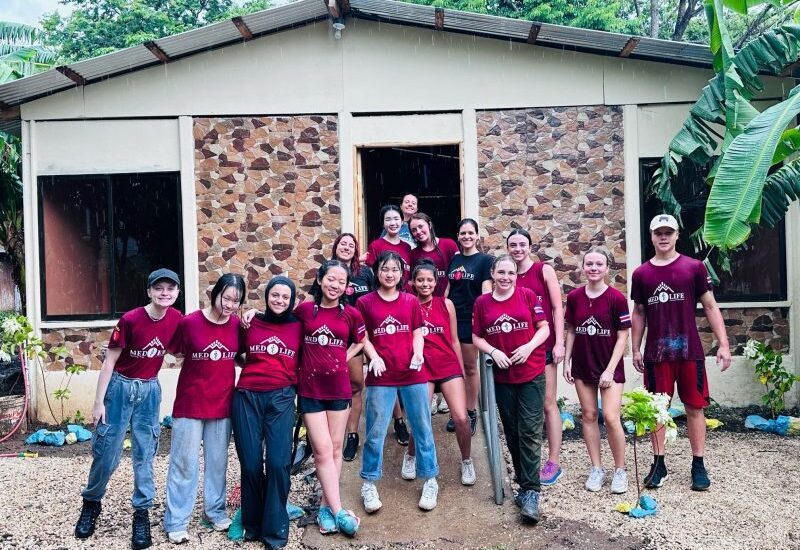
Safe Homes Movement, powered by MEDLIFE, runs the development service learning trip for high school and college students in Lima, Cusco and Tena. Students join community projects such as staircases, retaining walls, greenhouses and home construction. Local architects and engineers lead the design and supervise construction, and residents work on site in a 50/50 partnership.
During build days, students do hands-on tasks like mixing cement, laying bricks and installing handrails after a brief training. At the same time, they see how engineers read the terrain and make decisions. That mix of building and design can help you notice which side of construction excites you most.
Find the path that fits you
Whether you choose trade school or college, real experience on a construction site can make your decision clearer.
Fill out the form to get dates, eligibility details and next steps for the Development Service Learning Trip.
Frequently asked questions
Is trade school or college better for construction?
Neither is better for everyone. Trade school prepares you for hands-on building roles, while college prepares you for design, engineering and management roles. The right choice depends on the work you want to do.
Can you go to trade school and college?
Yes. Some people start in a trade and later earn a degree, while others combine a degree with hands-on training. Construction careers often reward both kinds of skills.
How can high school students explore construction careers?
Students can take shop or technical classes, shadow professionals, attend career programs or volunteer on construction projects supervised by licensed professionals.