

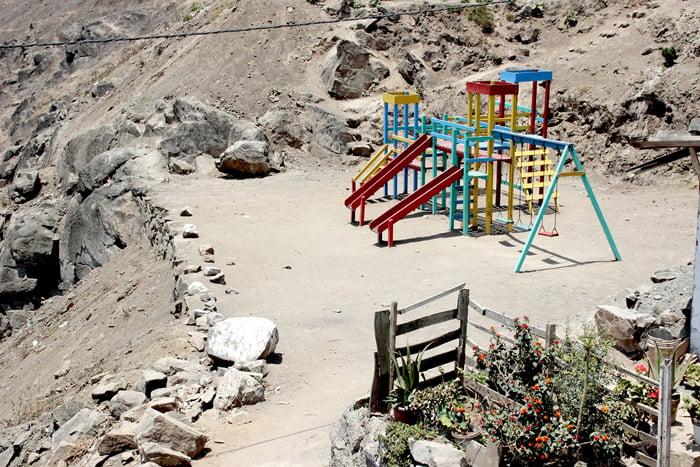
In many hillside neighborhoods around Lima, children play wherever they can: on dirt slopes, in narrow passages between homes or along roads with passing traffic. Kids find ways to play anywhere, but where they play shapes how safe they are, who they play with and how often they get outside at all. That's why playground design matters so much in low-income communities.
A well-planned play space gives children a safe place to move, explore and connect, and gives families a reason to gather. In this article, you will learn why play spaces matter in low-income communities, the core principles of community-centered playground design and how residents, local professionals and students can build these spaces together.
Why play spaces matter in low-income communities
Play is a right
Play isn't a luxury. Article 31 of the UN Convention on the Rights of the Child recognizes the right of every child to rest and leisure, to engage in play and recreational activities appropriate to their age, and to take part in cultural life and the arts.
Safe space is often missing
In dense or informal neighborhoods, open land is scarce and often uneven. Without a dedicated space, children may play in risky places. Our article on the social benefits of playgrounds explores how play spaces support children and families.
Play spaces build community
Playgrounds are also social infrastructure. Parents meet, neighbors watch out for each other's kids and local groups find a place to organize. For families facing housing instability, stable shared spaces can matter even more. Read about the effects of housing insecurity on children.
Principles of community-centered playground design
Playground design in low-income communities starts with the same goal as anywhere else: a safe, engaging space for children. But budgets, terrain and maintenance shape every decision.
1. Start with the community
Children and families know where they already play, what's missing and where it's safe to walk. Involving residents from the beginning helps the space fit real needs and builds a sense of ownership that keeps it cared for.
2. Design for the site
Hillside neighborhoods often have little flat land. A playground may need to work with slopes, terraces or small leftover spaces between homes.
3. Prioritize safety
Safe surfaces, stable structures, clear sightlines for caregivers and separation from traffic all reduce risk. Specific safety requirements depend on local standards and should be set by qualified professionals.
4. Plan for maintenance
A playground only works if it can be kept in good condition. Durable, locally available materials and a community plan for upkeep help a space last for years.
5. Include everyone
Spaces that welcome different ages and abilities, with shade and places for caregivers to sit, get used more and serve more families throughout the day.
| Principle | Key question |
|---|---|
| Community input | Who will use this space, and what do they need? |
| Site fit | How can the design work with the terrain? |
| Safety | What hazards need to be reduced? |
| Maintenance | Who will care for it, and with what? |
| Inclusion | Does it welcome all ages and abilities? |
How communities and students build play spaces together
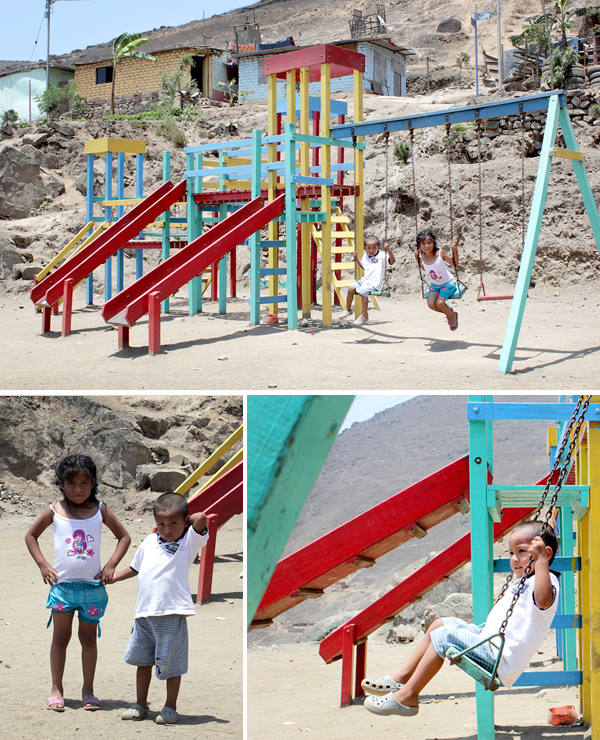
Safe Homes Movement, powered by MEDLIFE, works with communities in Lima, Cusco and Tena on infrastructure they prioritize, including public spaces, staircases, schools and homes. Every project follows a 50/50 model: residents identify the need and work on site, and local architects and engineers lead the design and supervise construction. A secure environment for children connects to everything else families need, as explained in our article on safe homes for families.
Examples from MEDLIFE's community projects
Safe Homes is MEDLIFE's development and infrastructure line, and MEDLIFE's wider project work shows how these principles play out in shared spaces:
- Streets and drainage in Bendición de Dios, Costa Rica: volunteers worked alongside residents to pave streets and build sewer canals and a drainage ditch. A community representative explained that wastewater and rainwater used to run down the street. Now routes to school and medical services are safer, and the roads are expected to help residents secure land titles.
- An accessible home and garden in Costa Rica: after a community leader contacted MEDLIFE, volunteers on several service learning trips built a new, more accessible home for an elderly couple with disabilities, then finished it with a rock trail and a garden the couple can enjoy by touch and smell.
- A school eco garden near Lima: at an elementary school in the hills around Lima, MEDLIFE helped create an eco garden with six beds, maintained by children, parents and teachers, along with a nutrition workshop for families.
Each one started with a need the community named and was built to be cared for by its users.
For architecture, landscape and urban design students, community play spaces are a powerful lesson in designing with constraints and with the people who will use the space. On the development service learning trip, high school and college students join these projects during summer, winter or spring.
Help build spaces where kids can play
Playground design is about more than equipment. It's about safety, connection and giving children a place of their own.
Fill out the form to get dates, eligibility details and next steps for the Development Service Learning Trip.
Frequently asked questions
What makes good playground design in low-income communities?
Good design involves the community from the start, fits the site, prioritizes safety, uses durable materials that can be maintained and welcomes children of different ages and abilities.
Why are playgrounds important for low-income communities?
Playgrounds give children safe places to play and help families connect. Play is also recognized as a right under Article 31 of the UN Convention on the Rights of the Child.
Who should design a community playground?
Qualified local professionals should lead the design and safety decisions, working closely with residents, including children and caregivers, who know how the space will be used.