
Peruvian Culture: A Guide for Student Volunteers
Peru is one of the most diverse countries in the Americas. In a single trip, you can move from the busy coastal capital of Lima to the Andean city of Cusco, where Quechua is spoken in markets and homes. Understanding Peruvian culture before you arrive helps you connect with people, avoid misunderstandings and get far more out of your experience.
This guide is not a list of rules or stereotypes. Peru has millions of people with different histories, languages and ways of life. Instead, you will learn some of the foundations of Peruvian culture: its languages and indigenous heritage, the tradition of community work, and everyday habits that will help you be a respectful guest and teammate as a student volunteer.
The foundations of Peruvian culture
Many languages, many peoples
Spanish is the most widely spoken language in Peru, but it is far from the only one. According to Peru's Ministry of Culture, the country recognizes 55 indigenous peoples and 48 indigenous languages. Quechua is the native language with the most speakers.
Identity is also diverse. In the 2017 national census, INEI found that about 5.8 million people aged 12 and over identified as Quechua or Aymara, including about 5.2 million who identified as Quechua. Self-identification is not the same as mother tongue: some people who identify as Quechua grew up speaking Spanish at home. The census also includes categories such as mestizo and Afro-Peruvian, reflecting centuries of migration and mixing.
In Cusco, you will likely hear Quechua alongside Spanish. A few greetings in Quechua or Spanish go a long way. Start with these easy Spanish phrases before you go.
Heritage you can see
Peru's history shows up in its buildings, roads and fields. Inca stonework stands next to colonial churches in Cusco, and adobe and stone homes still shape rural towns. Safe Homes has covered how architecture and culture blend across the country, from ancient techniques to modern construction.
Community work: a living tradition
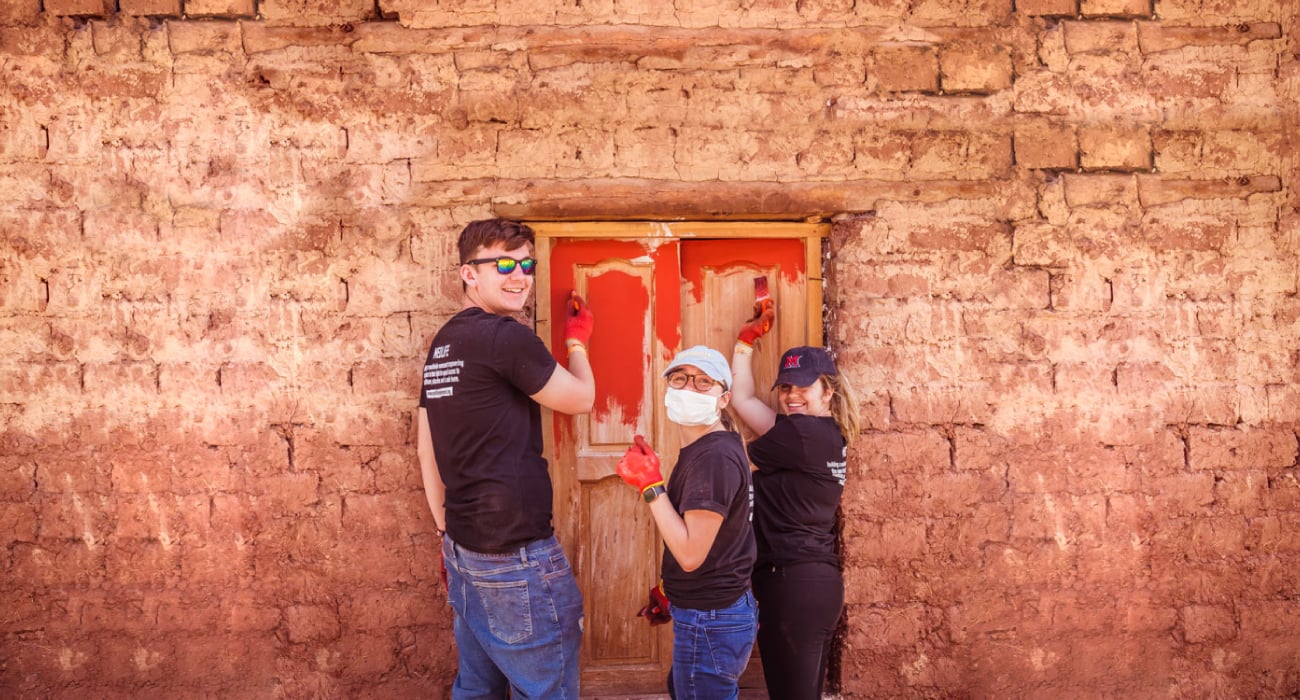
One of the most important ideas to understand in Peruvian culture, especially in the Andes, is collective work. Many communities, though not all and not in the same way, organize faenas or mingas: days when neighbors work together on shared projects like paths, canals or community buildings.
A powerful example is the Q'eswachaka bridge over the Apurímac River in the Cusco region. UNESCO recognized the knowledge, skills and rituals of its renewal as Intangible Cultural Heritage in 2013. Every year, neighboring Quechua communities renew the suspension bridge with woven grass ropes, using techniques passed down for generations.
This tradition helps explain why projects supported by Safe Homes, MEDLIFE's infrastructure program, follow a 50/50 model. Community members are not spectators; they are co-builders, decision makers and experts on their own neighborhoods. When volunteers join a project, they join work that the community already values and organizes.
Everyday etiquette for student volunteers
Customs vary by region, family and generation, so the best approach is to observe, ask and follow the lead of local staff. Still, a few habits are widely appreciated:
- Greet people. Saying "buenos días" or "buenas tardes" when you arrive at a worksite, home or shop is expected. Watch how local staff greet people and follow their lead.
- Use formal language at first. Address elders and community leaders as "señor" or "señora," and use "usted" until invited to be more casual.
- Ask before taking photos. Always ask permission, especially of children and elders, and respect a "no."
- Accept hospitality graciously. If a family offers food or drink, accepting it, or politely declining with thanks, shows respect.
- Be patient with time. Schedules can be flexible, and relationships often come before speed.
- Dress practically and modestly. On worksites, follow the safety rules and equipment provided.
Feeling some confusion is normal. Safe Homes' guides to culture shock abroad explain what to expect and how to adjust.
Where you will experience it
On the development service learning trip with Safe Homes Movement, powered by MEDLIFE, students spend about a week in Lima or Cusco (or Tena, in Ecuador), with four to five days of supervised field work on infrastructure projects. Local architects, engineers and community leaders guide volunteers throughout, and evenings offer time to reflect on what you learned.
Learn by working side by side
Peruvian culture is best understood through people: through conversations, shared meals and days of work alongside a community. Arrive curious, humble and ready to listen.
Fill out the form to get dates, eligibility details and next steps for the Development Service Learning Trip.
Frequently asked questions
What languages are spoken in Peru?
Spanish is the most widely spoken language, and Peru recognizes 48 native languages. Quechua is the native language with the most speakers.
What is a faena in Peru?
A faena is a day of collective community work, when neighbors join together on shared projects such as paths, canals or buildings.
How should volunteers show respect for Peruvian culture?
Greet people, use formal language with elders, ask before taking photos, accept hospitality graciously and follow the guidance of local staff and community leaders.