

Is Civil Engineering Hard? What Students Should Know
If you're thinking about the major, you've probably typed the question into a search bar: is civil engineering hard? The honest answer is yes, it's demanding. Civil engineering asks you to master calculus, physics and mechanics, then apply them to structures, soil and water that people trust with their lives. But "hard" doesn't mean "out of reach."
Most students who struggle aren't missing talent. They're missing context, study habits or a clear picture of why the theory matters. In this article, you will learn what makes civil engineering challenging, which parts students often find toughest, how to prepare, and how seeing real projects on site can turn abstract equations into something you understand.
Is civil engineering hard? What makes it challenging
Heavy math and physics foundations
Most civil engineering programs start with calculus, differential equations, physics and statics. These courses move fast and build on each other, so a weak spot early on can show up later.
Courses that build on each other
After the foundations come courses like mechanics of materials, structural analysis, geotechnical engineering, fluid mechanics and hydraulics. Each one depends on what came before. Falling behind in one class can make the next one feel much harder.
Problems with real consequences
Civil engineers design infrastructure where mistakes affect public safety. That's why accuracy, units and assumptions matter so much, and why professors are strict about them.
A long road to licensure
Becoming a licensed Professional Engineer adds more steps after graduation. According to NCEES, the usual path includes a degree from an EAC/ABET-accredited engineering program, passing the FE exam, gaining about four years of engineering experience and passing the PE exam. Requirements, and the order of these steps, vary by state.
| What feels hard | Why it's hard | What helps |
|---|---|---|
| Math and physics | Fast pace and abstract ideas | Practice problems, study groups |
| Upper-level courses | Each class builds on the last | Reviewing fundamentals regularly |
| Design projects | Open-ended with many constraints | Starting early and asking questions |
| Connecting theory to reality | Little exposure to real sites | Internships and field experience |
Which parts of civil engineering do students find toughest?
Every student is different, but a few areas come up again and again:
- Statics and mechanics of materials: many students' first real test of engineering thinking
- Structural analysis: keeping track of loads, forces and supports across a whole structure
- Geotechnical engineering: soil doesn't behave as neatly as steel or concrete
- Fluid mechanics and hydraulics: water moves in ways that are hard to picture on paper
Geotechnical topics, for example, become much easier to grasp when you see how soil and slopes behave in real conditions. In Lima, the effects of El Niño on human settlements show how heavy rain can threaten homes built on loose hillsides.
How to prepare and succeed in civil engineering
Build strong foundations early
In high school, take the most advanced math and physics courses available. In college, treat the first-year courses as the base for everything that follows.
Study with others
Engineering is a team sport. Study groups, tutoring centers and office hours help you catch mistakes and see different ways to solve the same problem.
Connect theory to real projects
The theory clicks faster when you see it applied. Internships, research, student design competitions and supervised field projects all help. Our article on learning outside the classroom explains what students take away from real construction sites.
Get hands-on field experience
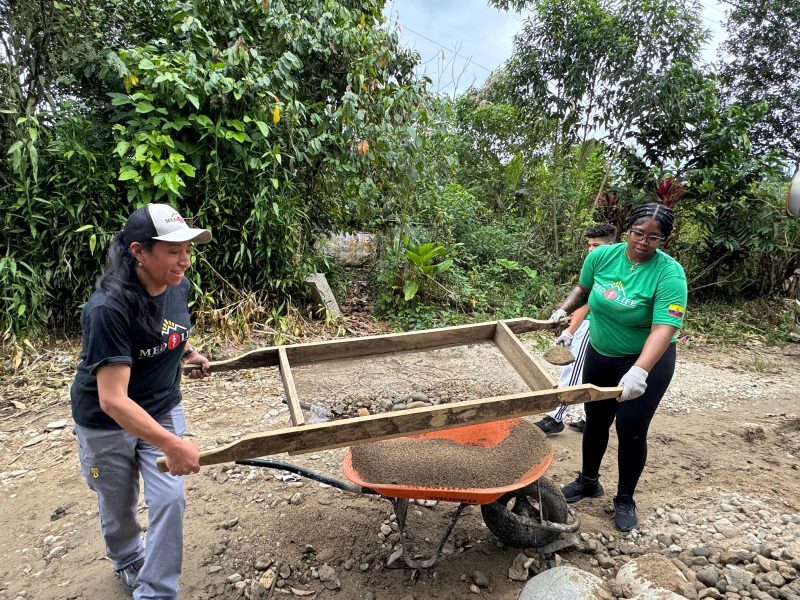
The development service learning trip with Safe Homes Movement, powered by MEDLIFE, gives high school and college students a chance to see civil engineering in practice. In Lima, Cusco and Tena, students work alongside residents and local architects and engineers on projects such as concrete staircases, retaining walls and home construction. Local professionals lead design and supervise every build, while students help with tasks like mixing cement and laying bricks. Trips run in summer, winter and spring. You can also read more about engineering volunteering with Safe Homes.
See civil engineering in action
Civil engineering is hard, but it becomes far more manageable when you understand why each concept matters. Seeing real infrastructure built on real ground is one of the best ways to get there.
Fill out the form to get dates, eligibility details and next steps for the Development Service Learning Trip.
Frequently asked questions
Is civil engineering harder than other engineering majors?
It depends on the student. Civil engineering is math- and physics-heavy like other engineering majors. Some students find its real-world applications easier to picture, while others find topics like soil behavior and structural analysis especially challenging.
What is the hardest class in civil engineering?
Many students point to statics, mechanics of materials, structural analysis or geotechnical engineering. These courses build on each other, so strong fundamentals help a lot.
Can I succeed in civil engineering if I'm not great at math?
Yes, with steady effort. Civil engineering requires a lot of math, but many students improve through practice, tutoring and study groups. Seeing how the math applies to real projects can also make it easier to learn.