

How to Become a Civil Engineer: Step-by-Step Guide
The bridges you cross, the water that reaches your home and the stairs that connect hillside neighborhoods to the city below all started with a civil engineer. If you like math, enjoy solving practical problems and want your work to show up in the real world, civil engineering might be the right path. Here's how to become a civil engineer, step by step.
But the path isn't always clear from the outside. What should you study in high school? What degree do you need? What about licensing? In this article, you will learn the main steps to becoming a civil engineer, from your first classes to professional licensure, plus practical ways to build field experience and skills along the way.
How to become a civil engineer: the main steps
Step 1: Build a foundation in high school
Take the most advanced math and science classes available, especially calculus, physics and chemistry. Courses in drafting, computer science or design are also helpful. Outside class, robotics teams, engineering clubs and design challenges let you practice problem-solving with others.
Step 2: Earn a bachelor's degree
According to the U.S. Bureau of Labor Statistics, civil engineers typically need a bachelor's degree in civil engineering or a related field, and employers usually prefer graduates of accredited programs. Expect courses in statics, mechanics, materials, structural analysis, soil mechanics, hydraulics and transportation.
Step 3: Gain experience
Internships, co-ops, research and field projects help you connect classroom concepts with real work. Field experience also helps you discover which specialty interests you most.
Step 4: Pursue licensure
The BLS notes that licensure is not required for entry-level civil engineers. State licensure generally requires a degree from an accredited engineering program, a passing score on the Fundamentals of Engineering (FE) exam, several years of relevant work experience and a passing score on the Professional Engineering (PE) exam. Requirements vary by state, so check with the licensing board where you plan to work.
| Step | What it involves | When |
|---|---|---|
| Foundation | Math, physics, clubs and projects | High school |
| Degree | Bachelor's in civil engineering | College |
| Experience | Internships, field work, research | During and after college |
| Licensure | FE exam, experience, PE exam | After graduation |
Choosing a civil engineering specialty
Civil engineering is broad. The BLS lists several common specialties:
- Construction engineering: managing construction projects and temporary structures
- Geotechnical engineering: how structures interact with soil and rock
- Structural engineering: designing and assessing buildings, bridges and dams
- Transportation engineering: streets, highways, airports and transit
Many students only discover their specialty after working on a real project. Seeing a slope stabilized or a staircase built on a hillside can spark an interest you didn't know you had.
Skills that help you succeed
Technical knowledge is essential, but civil engineers also rely on:
- Problem-solving: adapting when site conditions don't match the plan
- Communication: explaining decisions to clients, crews and communities
- Teamwork: collaborating with architects, builders and residents
- Project management: keeping schedules, budgets and safety on track
- Spanish or other languages: useful for projects in Latin America and diverse communities at home
Volunteering on supervised builds is one way to build these skills. Read how engineering volunteering builds experience, how students make an impact through building homes as volunteers, and how to describe your volunteer experience on a resume.
Building field experience with Safe Homes Movement
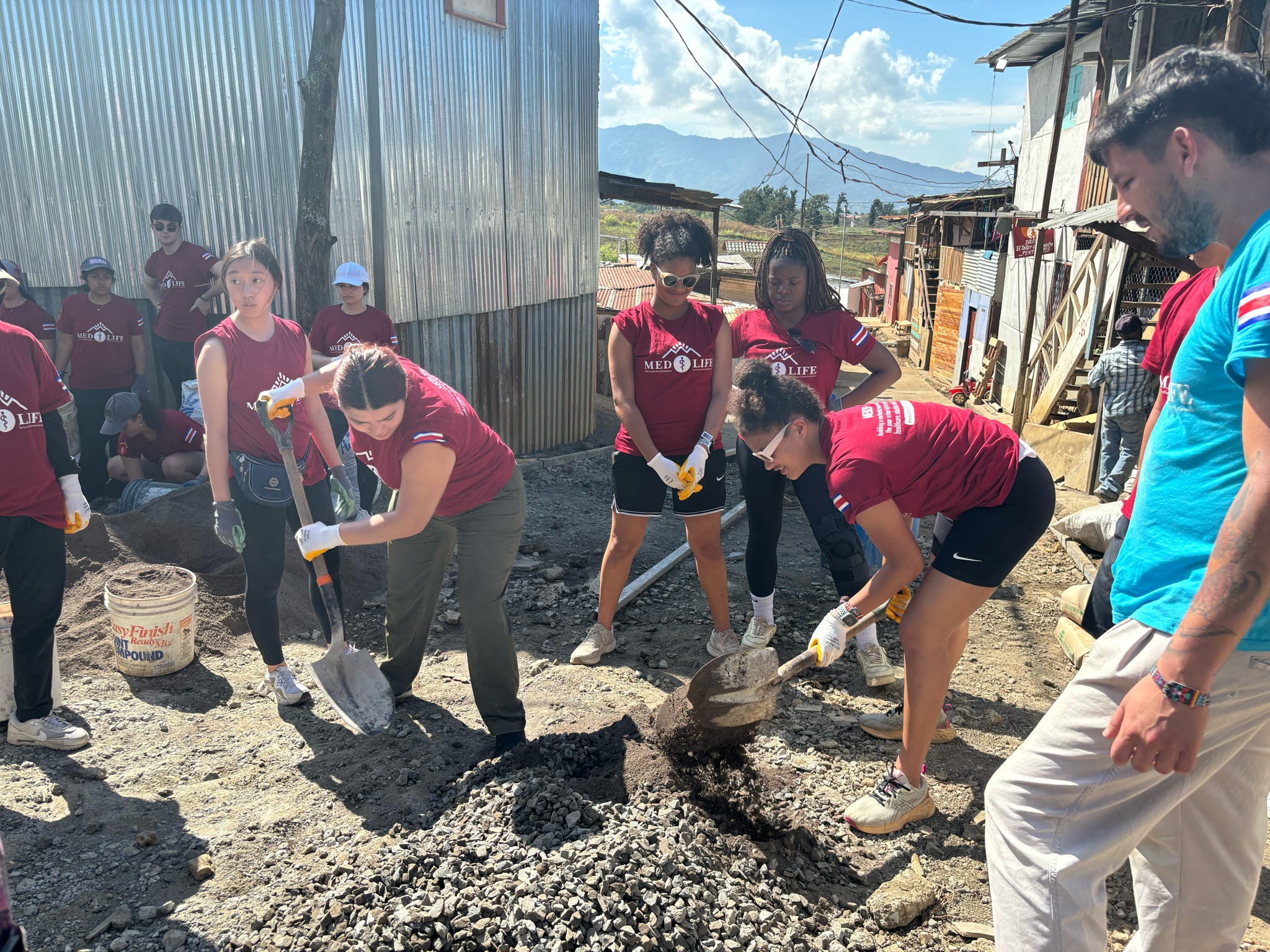
If you want to see civil engineering in action before or during college, field experience can help. The development service learning trip with Safe Homes Movement, powered by MEDLIFE, is not an internship, but it offers a hands-on alternative for high school and college students who want to see infrastructure built in real conditions.
Trips run in Lima, Cusco and Tena during summer, winter and spring sessions. Projects can include staircases, retaining walls, greenhouses and home construction. Every project follows a 50/50 model: residents identify the need and work on site, while local architects and engineers lead the design and supervise construction. Students help with tasks like mixing cement, laying bricks and installing handrails, and see how engineers adapt to terrain, budget and available materials.
Start your path with real experience
Learning how to become a civil engineer starts with curiosity and gets clearer with every real project you see.
Fill out the form to get dates, eligibility details and next steps for the Development Service Learning Trip.
Frequently asked questions
How long does it take to become a civil engineer?
Most civil engineers complete a four-year bachelor's degree. Becoming a licensed Professional Engineer usually takes several more years of work experience, plus passing the FE and PE exams.
Do you need a license to be a civil engineer?
According to the BLS, licensure is not required for entry-level civil engineers. A Professional Engineering (PE) license is often needed for higher-level roles, such as signing off on designs or leading projects.
What high school classes help you become a civil engineer?
Calculus, physics and chemistry are the most useful. Drafting, computer science and design courses, along with engineering clubs, also help prepare you.