
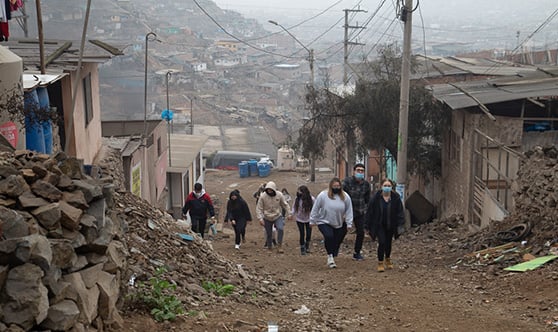
For families living on the steep hillsides surrounding Lima, getting to school, work, or a health clinic can mean navigating loose rocks, unpaved paths, and dangerous slopes every single day. This is where sustainable mobility becomes a matter of safety, dignity, and opportunity.
In this article, we'll break down what sustainable mobility actually means, why access is its most overlooked pillar, and how a real infrastructure project in Lima community shows what happens when mobility becomes something everyone can rely on.
What Is Sustainable Mobility, and Why Does Access Matter Most?
According to Neste's overview of sustainable mobility, the concept goes far beyond simply cutting emissions. The European Union Council of Ministers of Transport defines a sustainable transportation system as one that allows people, companies, and society to meet their basic access and development needs safely, while the United Nations frames it as mobility that is safe, affordable, accessible, efficient, and resilient for both current and future generations.
Within that definition, access to mobility stands out as a foundational pillar. Sustainable mobility isn't only about smart traffic systems or electric vehicles, it's about ensuring that regardless of income or location, people can physically reach the places that shape their lives, such as schools, jobs, markets, and healthcare.
For vulnerable populations and geographically isolated communities, this kind of equitable access is often the missing link between opportunity and exclusion.
In dense urban settlements built into steep terrain, like many of Lima's hillside communities, this principle takes on a very literal, physical form. Mobility it's about whether a child can safely walk to school, or whether an elderly resident can reach a clinic without risking a fall.
How Sustainable Mobility impacts Social Equity
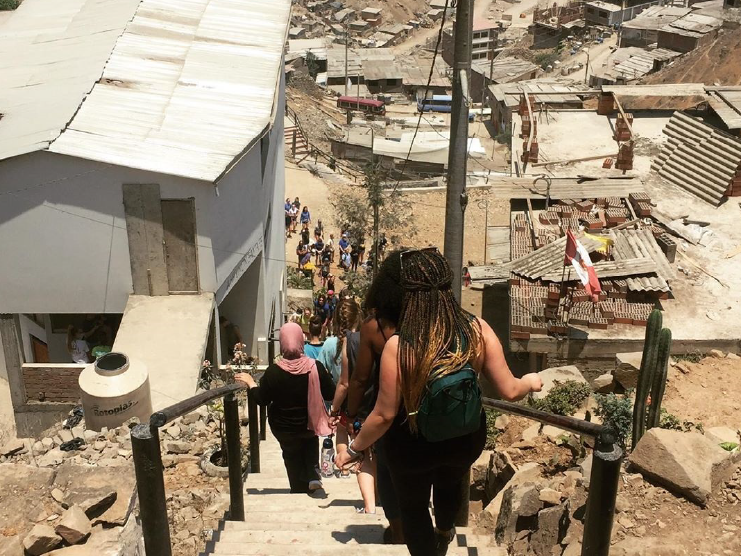
Social equity means that everyone, regardless of their circumstances, has fair access to the resources and opportunities they need to thrive. Mobility is one of the clearest ways this plays out in daily life. When a community lacks safe infrastructure to move through its own neighborhood, every other opportunity: education, employment, healthcare, becomes harder to reach.This is especially true in informal settlements, or "pueblos jóvenes," on the outskirts of Lima, where nearly a million residents live on precarious rocky hillsides. Without safe paths or stairways, something as routine as walking to a bus stop can become physically dangerous, particularly during Lima's rainy season. Children and elderly residents are disproportionately affected, since they're the most vulnerable to falls and injuries on unstable terrain.
Improving physical access, then, is not a side project to social equity, it's one of its most direct expressions. When a community gains a safe, reliable way to move through its own streets, it gains a more equitable starting point for accessing everything else the surrounding city has to offer.
Case Study: The MEDLIFE Staircase in 2 de Diciembre, Lima
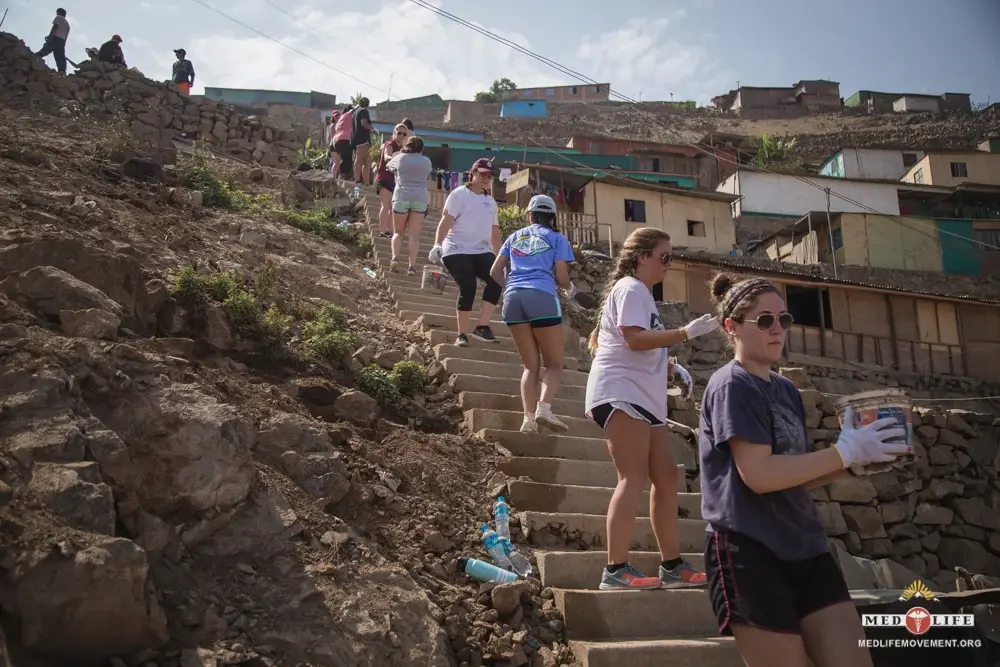
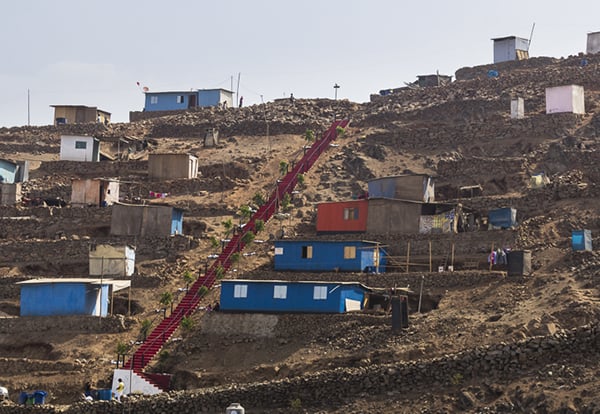
One clear example of sustainable mobility improving social equity is the staircase project completed in the 2 de Diciembre community of Lima. Families there had long faced daily risks navigating steep hills and unsafe walking paths just to reach school, work, or the local clinic. Challenges that intensified during rainy weather.
Through a volunteer building project, SafeHomes brought student volunteers together with local residents to construct a safe concrete staircase. The impact went beyond improved mobility.
The project also supported families working toward securing land titles, since legal land recognition is often required to access public utilities like water and electricity.
In this way, a set of concrete stairs became a gateway to essential resources and long-term legal stability, not just a shortcut up a hillside.
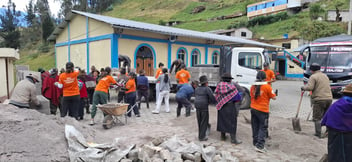
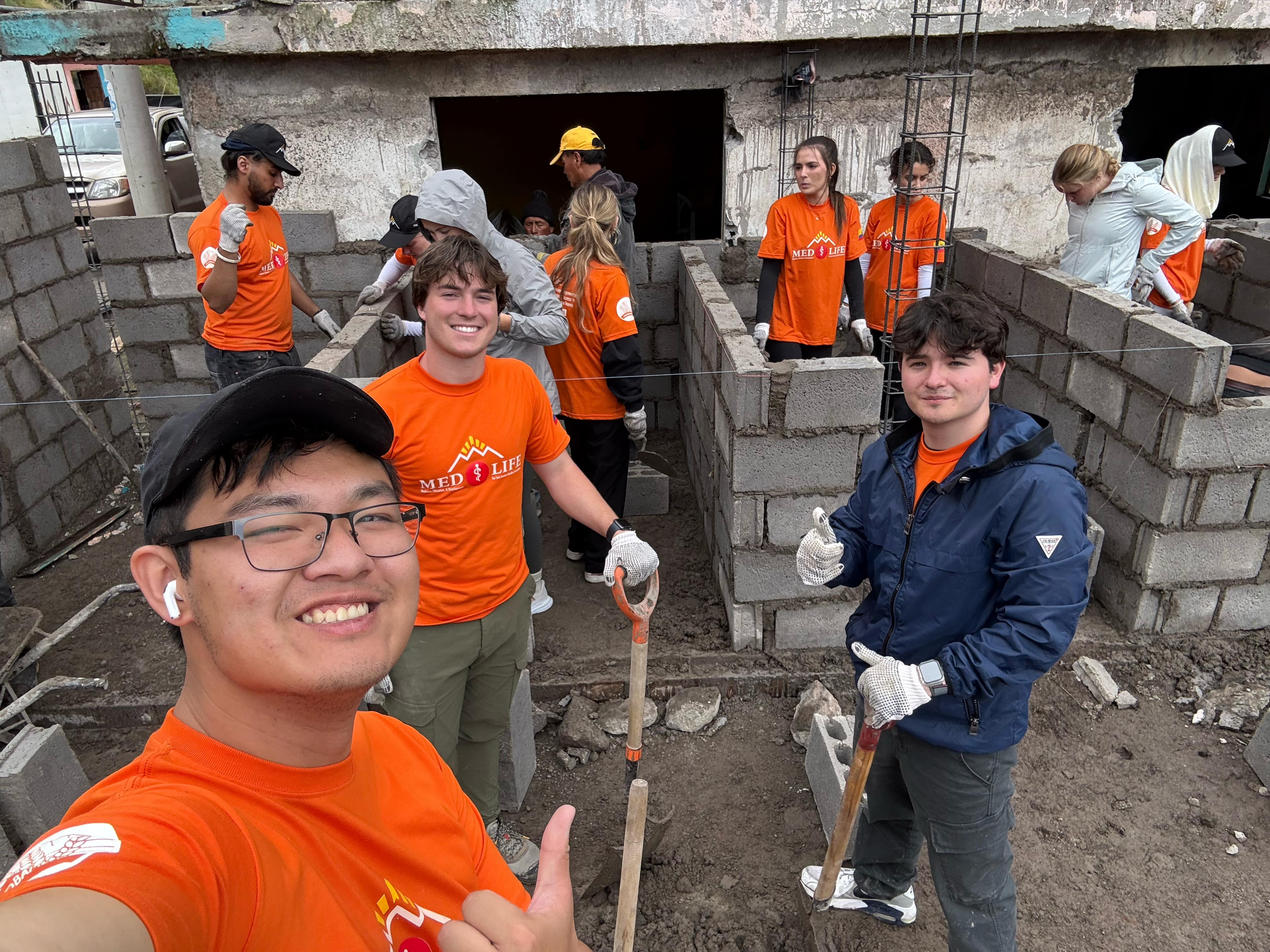
Student volunteers from universities including Yale, the University of Chicago, the University of Puerto Rico, and the University of Florida worked side by side with local residents and the SafeHomes team, mixing cement, laying bricks, and installing handrails. Always in partnership with local professionals guiding the technical work. This collaborative, community-led approach ensured the staircase actually met the neighborhood's everyday needs, rather than imposing an outside solution.
Since its completion, daily life in 2 de Diciembre has changed measurably: children now have a safer path to school, families can reach healthcare services more easily, and elderly residents no longer have to risk injury just to leave their homes. It's a clear, tangible example of how building projects can help low-income communities move closer to lasting equity. One staircase at a time.
If you're curious about how these kinds of neighborhoods have evolved over time, take a look at how Lima's hillside neighborhoods are changing, or explore what it really means to volunteer without doing harm in communities like this one.
FAQ about Sustainable Mobility
1. What does "access to mobility" mean in sustainable development?
It refers to ensuring that all people — regardless of income, location, or ability — can safely and affordably reach the places they need, like schools, jobs, and healthcare, without being excluded by unsafe or nonexistent infrastructure.
2. Why is a staircase considered a mobility infrastructure project?
In hillside communities without paved roads, a staircase functions the same way a road or sidewalk would elsewhere: it's the primary safe route residents use to move through their neighborhood every day.
3. How do MEDLIFE and Safe Homes ensure these projects are built safely?
Every project is carried out in partnership with local architects and engineers, who guide the technical work alongside student volunteers and community members, ensuring the final structure meets real community needs.
Ready to Build Real Access, Side by Side?
SafeHomes is a program of MEDLIFE, working alongside families in Peru and Ecuador to build the infrastructure that connects communities to healthcare, education, and economic opportunity.
Projects like the 2 de Diciembre staircase show what's possible when infrastructure and equity intersect. If you're a student in engineering, architecture, or community development looking for hands-on field experience, our Development Service Learning Trip gives you the chance to work directly with local professionals and residents on projects that create lasting, safe access for communities in Lima, Cusco, and Tena.
Fill out our form to learn more about joining the movement.
To learn more about how you can get involved, check out our Safe Homes Movement brochure. And remember, for less than one coffee a month, you can make an impact in low-income communities by becoming a monthly donor and directly assisting communities in need.
.jpg?width=352&name=44c8abbd-95c9-4ea8-9af1-3f4ad548aa81%20(1).jpg)