

How Concrete Is Made: Basics for Student Builders
Concrete is everywhere: sidewalks, foundations, bridges and the hillside staircases that connect families in Lima to the rest of the city. Yet most people who walk on it every day couldn't explain how concrete is made or why it gets so strong. For students interested in civil engineering, architecture or construction, those basics are a great place to start.
In this article, you will learn what concrete is made of, what each ingredient does, how concrete hardens through a chemical reaction called hydration, and why curing matters so much. You'll also see how students work with concrete on real community projects, always under the guidance of local engineers who make the technical decisions on site.
How concrete is made: the basic ingredients
Concrete and cement are not the same thing. According to the Portland Cement Association, cement is one ingredient in concrete, the glue that binds everything together. Concrete is the composite material made by combining cement, water and aggregates.
Cement: the binder
Cement is a fine powder. On its own, it doesn't form a structural material. When mixed with water, it forms a paste that coats the aggregates and hardens into a rock-like mass.
Water: the activator
Water starts the chemical reaction that makes cement harden. The Portland Cement Association notes that mixing water should generally be clean enough to drink, because impurities can affect setting time and strength.
Aggregates: the bulk
Aggregates are sand, gravel or crushed stone. They make up most of the mix. The Portland Cement Association reports that aggregates typically account for about 60% to 75% of the total volume of concrete, and they should be clean and well graded.
| Ingredient | Role in the mix | What matters |
|---|---|---|
| Cement | Binds aggregates together | Type and amount |
| Water | Starts hydration | Cleanliness and quantity |
| Aggregates | Provide bulk and strength | Clean, well-graded material |
| Admixtures (optional) | Adjust properties | Chosen by engineers for each job |
How concrete hardens: hydration and curing
Hydration
Concrete doesn't harden by drying out. It hardens through hydration, a chemical reaction between cement and water that begins soon after they are mixed. According to the Portland Cement Association, most strength gain happens within the first month, but hydration continues slowly for years.
The water-cement ratio
Engineers pay close attention to the water-cement ratio, which compares the weight of the water to the weight of the cement. Getting this balance right affects how strong and durable the finished concrete will be. That's one reason mix designs are set by professionals, not guessed on site.
Curing
Curing means keeping concrete moist so hydration can continue after it's placed. Common methods include sprinkling with water, covering the surface with damp fabric or sealing it with plastic. The Portland Cement Association notes that the longer concrete is kept moist, the stronger and more durable it becomes.
Working with concrete on community projects
In hillside communities around Lima, concrete is essential for staircases, retaining walls and home improvements. Building on steep terrain adds challenges: materials often have to be carried uphill, mixing may happen by hand and space to work is limited.
What students do
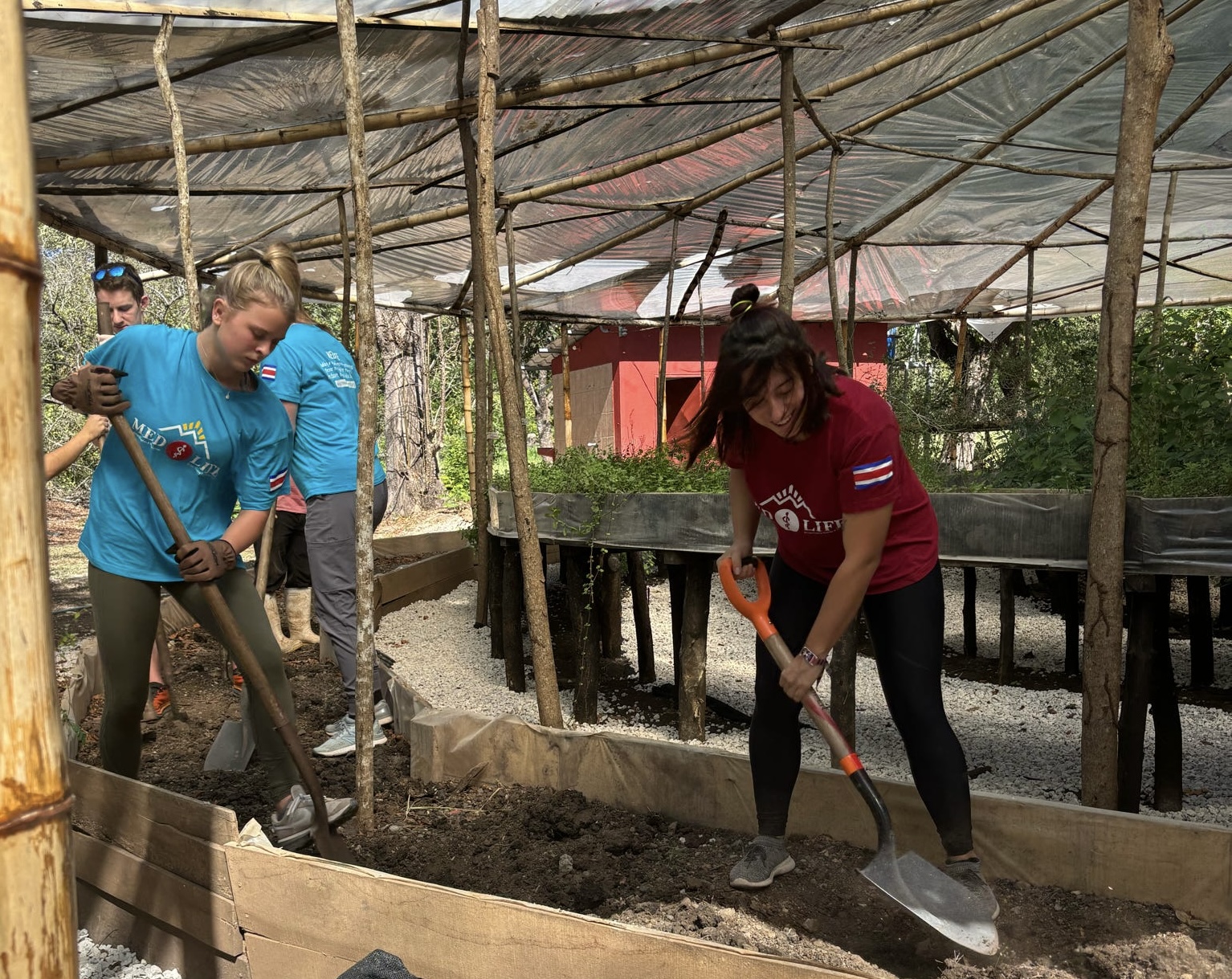
On Safe Homes Movement projects, students help with tasks like mixing cement, carrying materials, laying bricks and installing handrails. Local architects and engineers lead the design, decide on the mix and supervise every stage. Students follow their instructions and learn why each step matters. If you've never worked on a build before, start with these volunteer construction work basics.
Learning on the job
Much of the learning happens in conversation with local professionals and community members, often in Spanish. This guide to construction in Spanish can help you prepare. You can also read about construction volunteering abroad and how it combines travel with hands-on learning.
Join a project
Safe Homes Movement, powered by MEDLIFE, runs the development service learning trip for high school and college students in Lima, Cusco and Tena, with trips in summer, winter and spring. Every project follows a 50/50 model: residents identify the need and work on site, while local professionals lead the technical work.
Build your concrete knowledge on site
Understanding how concrete is made is the first step. Seeing it mixed, placed and cured on a real hillside, alongside local engineers and the families who will use the result, is where the lessons really stick.
Fill out the form to get dates, eligibility details and next steps for the Development Service Learning Trip.
Frequently asked questions
What is concrete made of?
Concrete is made of cement, water and aggregates such as sand, gravel or crushed stone. Some mixes also include admixtures or other materials chosen by engineers to adjust performance.
What is the difference between cement and concrete?
Cement is one ingredient in concrete. It acts as the binder. Concrete is the finished composite material made by combining cement, water and aggregates.
Why does concrete need curing?
Curing keeps concrete moist so the chemical reaction called hydration can continue. Concrete that is kept moist longer becomes stronger and more durable.