
A single project can change the shape of a day. Before a staircase, a trip to the clinic means crossing a dangerous slope. After, it is a walk with a handrail. Community development projects in Peru and Ecuador often look modest in photos, but their effects on safety, health and daily routines add up. In this article, you will see what changes before and after common project types and why community participation helps those changes hold. You will also learn how students can contribute alongside local professionals.
In this article, you will learn:
- What daily life looks like before and after key project types
- A real example from the 2 de Diciembre community in Lima
- Why the 50/50 model helps results last
- How students can take part in community development projects
What community development projects change, project by project
Every project starts with a need the community identifies. Here is how the most common project types change daily life.
Staircases on steep hillsides
| Before | After |
|---|---|
| Residents cross loose dirt slopes to reach the main road | A concrete staircase with handrails connects homes to services |
| Children and older adults face the highest fall risk | Children have a safer route to school |
| Reaching the clinic is risky, especially when wet | Families reach health services more easily |
Home renovations
| Before | After |
|---|---|
| Homes built from reed mats or plywood on unstable ground | Safer structures designed with local professionals |
| Exposure to weather and structural risk | More protection and stability for families |
Hygiene and sanitation projects
| Before | After |
|---|---|
| Limited access to safe sanitation | Improved facilities such as eco-bathrooms |
| Higher hygiene-related health risks | Better conditions for health and dignity |
Sanitation matters especially for children; read more about hygiene facilities in schools.
Greenhouses and community spaces
In Cusco's highlands, greenhouse projects support food production in a high-altitude climate. In Lima, public spaces like parks give neighbors safer places to gather and play.
A closer look: the 2 de Diciembre staircase in Lima
Before
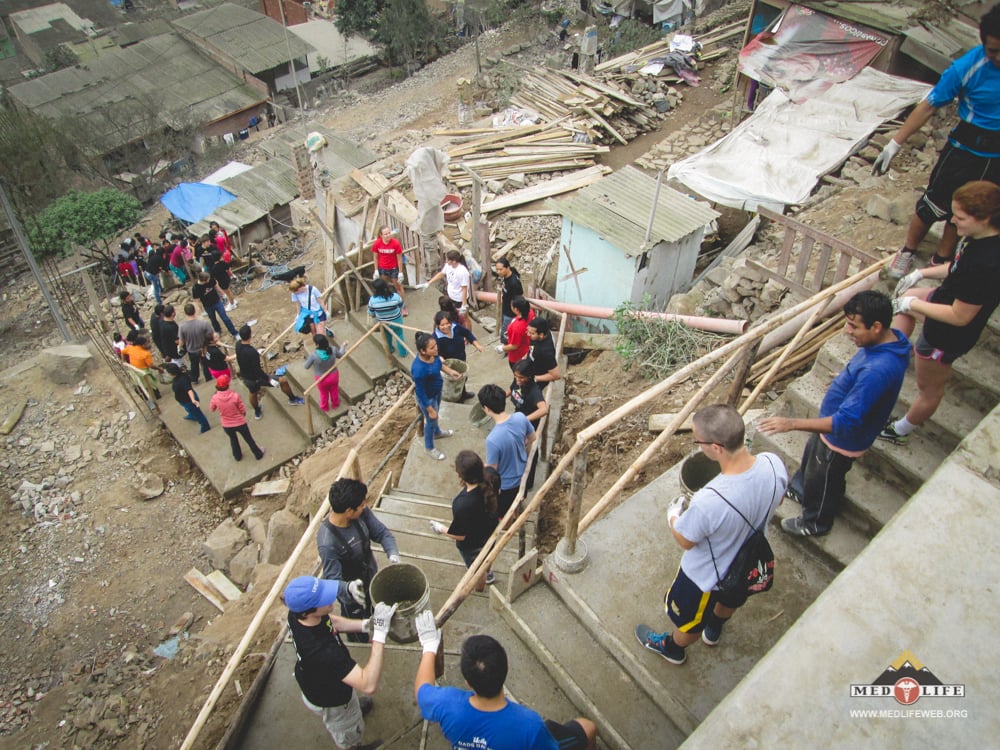
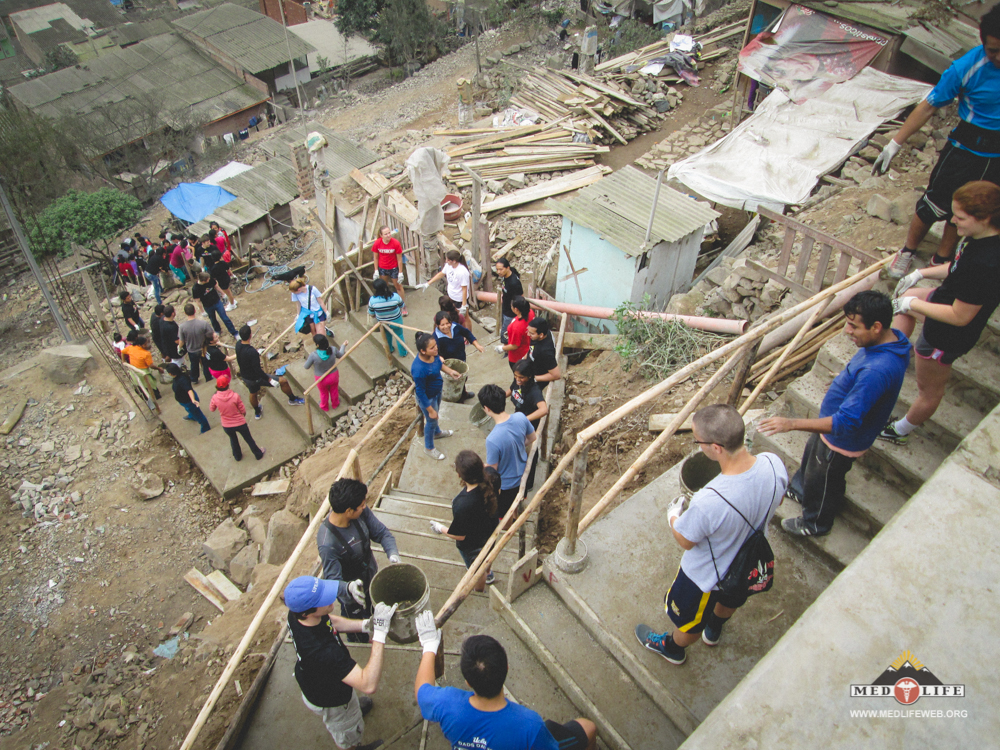
In 2 de Diciembre, many homes sit on unstable terrain. Getting to school, work or the clinic meant navigating steep, unsafe slopes, especially in rainy weather. For older residents and people with limited mobility, leaving home carried a risk of injury.
During
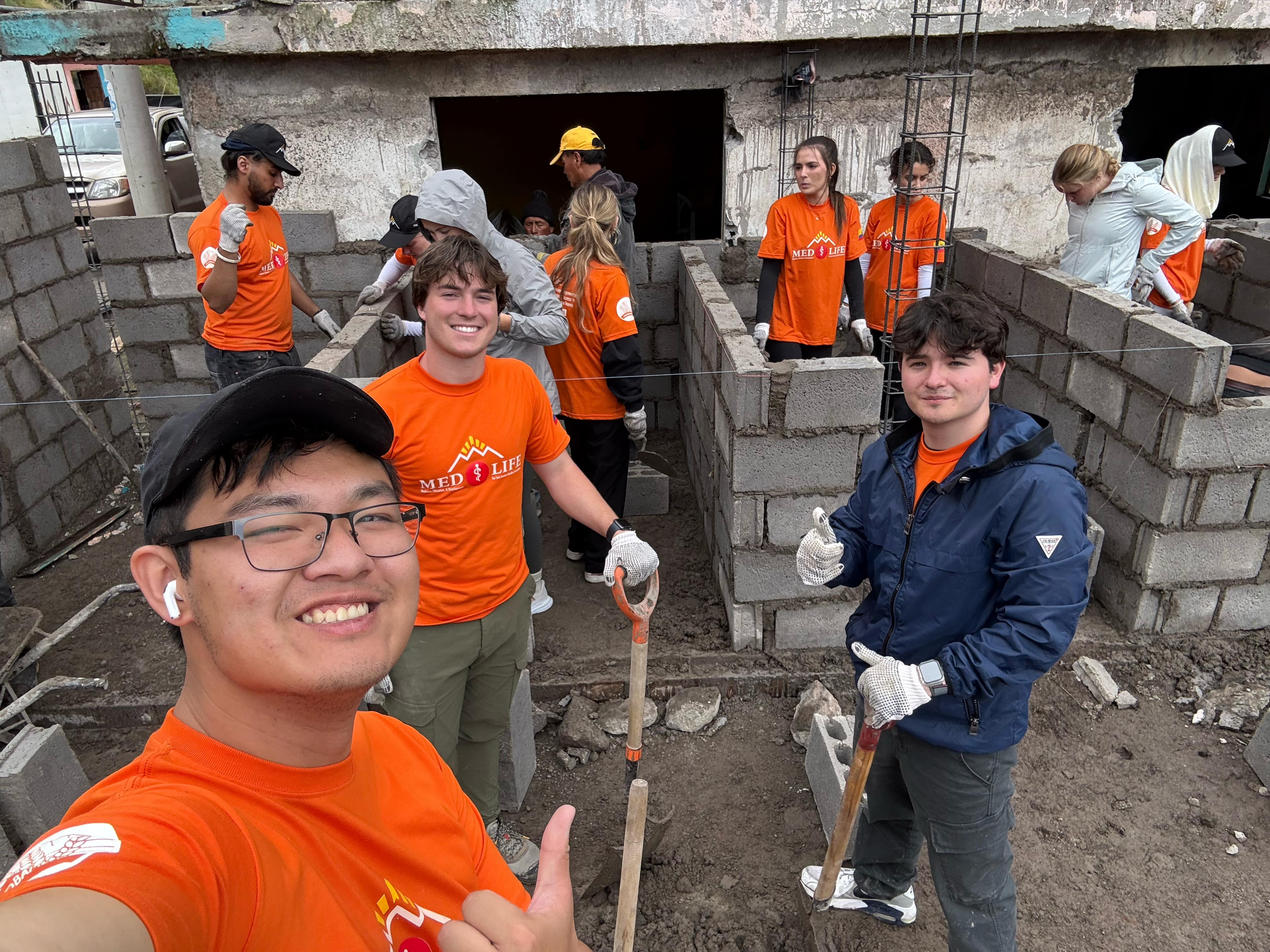
Residents, local professionals and student volunteers from universities across the United States worked together. They mixed cement, laid bricks and installed handrails to build a durable concrete staircase. Local architects and engineers led the technical work.
After
- Safety: a safer path for children going to school
- Health: easier access to health services
- Mobility: older residents can leave home without risking injury
- Legal progress: the staircase supports families' efforts to secure land titles, which are often needed to access water and electricity
Why the 50/50 model helps results last
A "before and after" only matters if the "after" holds up. Three things help:
- Community ownership: residents identify the need and build alongside volunteers, so the project fits how they live.
- Professional leadership: local architects and engineers design and supervise the work.
- Continuity: projects are part of ongoing partnerships with the same communities.
That's why we see housing and infrastructure as part of a larger process. Read more about why safe housing and community development go hand in hand, or see Safe Homes' impact in Ecuador.
How students take part
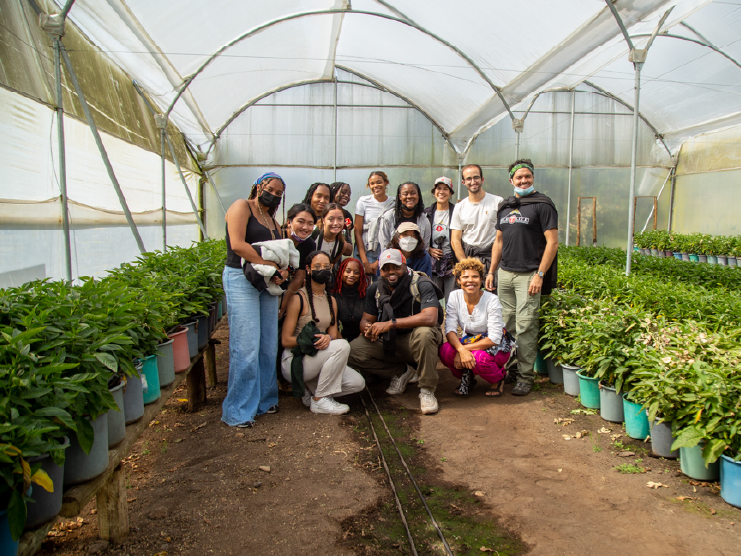
On the Development Service Learning Trip, students spend a week in Lima, Cusco or Tena. In Lima, for example, the week includes:
- Orientation
- A Reality Tour of the communities
- Several build days with training from local professionals
- A final inauguration where the community celebrates the finished project
Join the next project
In these neighborhoods, change is built step by step, by communities and local professionals working together. If you want to contribute to that work, fill out the form to get more information about the Development Service Learning Trip in Lima, Cusco or Tena.
FAQ
What are community development projects?
They are projects that improve shared infrastructure and living conditions, such as staircases, homes, sanitation, greenhouses and schools. Effective projects are identified by the community and led by local professionals.
How long does a project take?
On the Development Service Learning Trip, students contribute during several build days within one week, and the week closes with an inauguration alongside the community. Timelines vary by project type and scope.
Who maintains the projects afterward?
Communities participate in planning and construction, so residents are involved from the start and have a stake in caring for the result.