

Engineering Technology vs Engineering: Key Differences
You like building things, solving problems and figuring out how the world works. You know you want a technical career. But when you start browsing college programs, you find two options that sound almost identical: engineering and engineering technology. Which one fits you? The engineering technology vs engineering question confuses many students, and the answer depends on how you like to learn and work.
Both paths lead to hands-on, technical careers, and both are valuable. The difference lies mainly in focus: one leans toward theory and design, the other toward application and implementation. In this article, you will learn how accreditation bodies describe each path, what you'd study, how the two roles work together on real projects, and how to explore both before you choose.
Engineering technology vs engineering: how they differ
ABET, the organization that accredits many engineering and technology programs in the United States, separates them into different commissions. According to ABET, engineering programs often focus on theory and conceptual design, while engineering technology programs usually focus on application and implementation. Each is reviewed under its own set of criteria.
Two commissions
ABET's Engineering Accreditation Commission (EAC) reviews engineering programs, and its Engineering Technology Accreditation Commission (ETAC) reviews engineering technology programs. Knowing which commission accredited a program helps you understand what kind of degree it is. ABET also has separate commissions for applied and natural science (ANSAC) and computing (CAC), so the accrediting commission is a quick way to compare programs side by side.
The last two rows of the table are general descriptions, not ABET definitions.
| Engineering | Engineering technology | |
|---|---|---|
| Main focus | Theory and conceptual design | Application and implementation |
| ABET commission | EAC | ETAC |
| Typical strengths | Analysis, modeling, design | Testing, building, operating systems |
| Learning style | More abstract math and science | More hands-on labs and applied work |
What you study in each program
Engineering programs
Engineering programs typically build on advanced math and science, then move into analysis and design. Students learn to model systems, predict how they'll behave and create new solutions.
Engineering technology programs
Engineering technology programs typically emphasize applied labs, equipment and real-world methods. Students learn to implement, test and improve systems that engineers have designed.
Licensure considerations
If you're thinking about becoming a licensed professional engineer, the type of degree can matter. Keep in mind that program accreditation and a professional license are different things: accreditation applies to the program, while a license is granted to a person by a state board. Requirements vary by state, so check with the licensing board where you plan to work before choosing a program.
How engineers and technologists work together
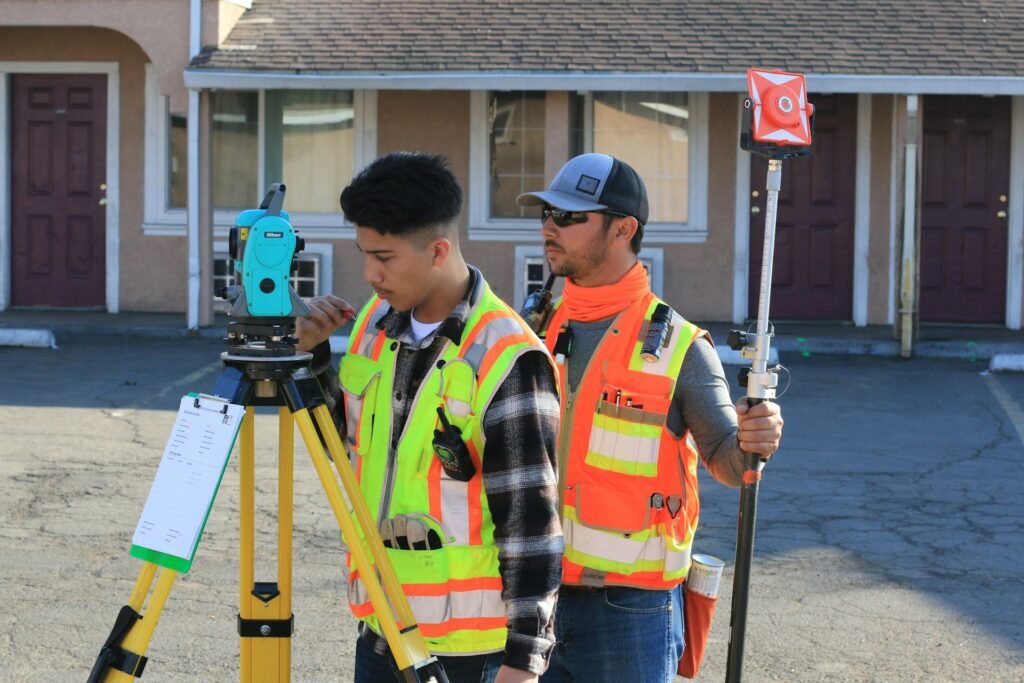
On a real project, the two roles complement each other. Engineers often focus on design decisions and calculations. Technologists often focus on putting those designs into practice, testing them and solving problems on site.
Community construction shows this teamwork clearly. A staircase or retaining wall starts with design, but it only works if it's built carefully, with the right methods and constant checking. Our article on construction project management explores how teams coordinate this work, and this look at what students learn outside the classroom shows how hands-on work builds skills both paths need.
On a hillside staircase, for example, decisions about the route, drainage and structure only matter if they are carried out carefully at every step. Seeing that handoff in person shows how much both perspectives depend on each other.
How to choose between the two
Ask yourself a few questions:
- Do you enjoy abstract math and designing from scratch? Engineering may fit you.
- Do you prefer labs, equipment and making things work? Engineering technology may fit you.
- Do you want to pursue a PE license? Check your state's requirements for each degree type.
- Have you seen both roles in action? Field experience can help you decide.
Seeing a real build is one of the clearest ways to compare. On projects made possible through Safe Homes Movement, powered by MEDLIFE, communities build alongside student volunteers, local architects and engineers lead design and supervise construction, and community leaders guide volunteers throughout. Students see both the design thinking and the hands-on implementation behind every project. You can compare options in our guide to the best programs for construction experience.
On the development service learning trip, high school and college students join projects in Lima, Cusco and Tena during summer, winter or spring, with four to five days of supervised field work.
Explore both paths on a real site
Engineering and engineering technology are two sides of the same goal: building things that work and keep people safe. Seeing both at work can help you choose with confidence.
Fill out the form to get dates, eligibility details and next steps for the Development Service Learning Trip.
Frequently asked questions
What is the difference between engineering technology and engineering?
According to ABET, engineering programs often focus on theory and conceptual design, while engineering technology programs usually focus on application and implementation. They're accredited by different ABET commissions.
Is engineering technology easier than engineering?
Not necessarily. The two programs emphasize different skills. Engineering usually involves more abstract math and design, while engineering technology involves more applied, hands-on work.
Can engineering technology graduates become licensed engineers?
It depends on the state. Licensure requirements vary by licensing board, so students should check the rules where they plan to practice before choosing a program.