

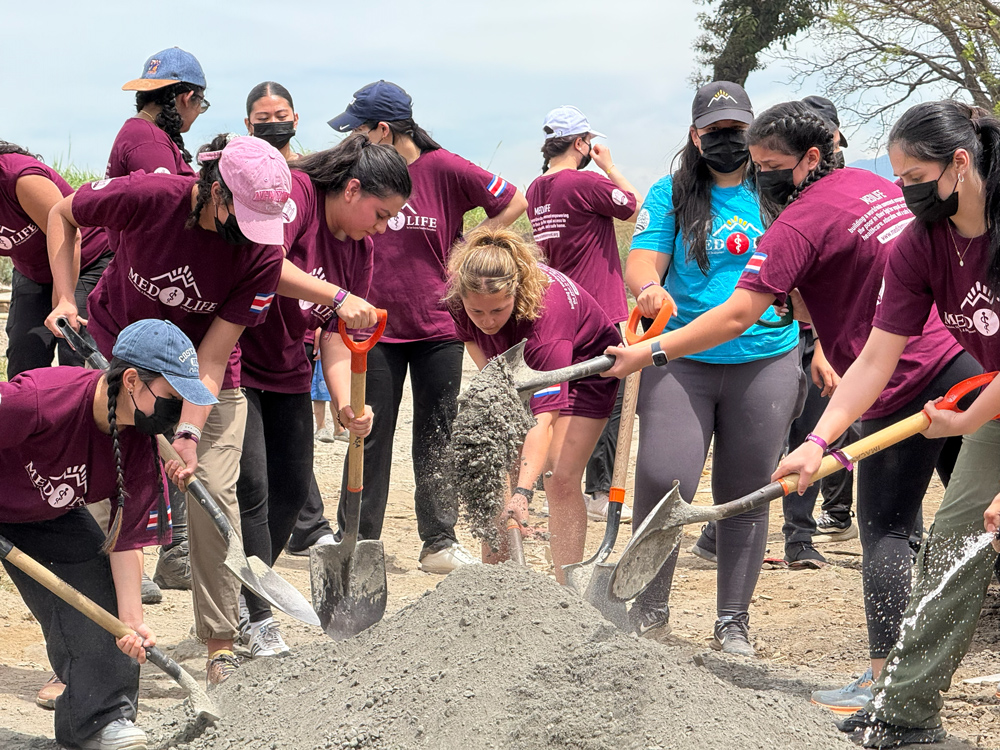
Most engineering students can list the same things: the courses they took, the software they know, the bridge they modeled for a class assignment. What's harder to show is how you think when a real project meets real limits, such as a slope that's steeper than expected, materials that have to be carried up by hand or a design that has to work for the people who use it every day. A strong engineering student portfolio can show exactly that: your process, not just your grades.
In this article, you will learn what to include in an engineering student portfolio, how to document a field project while you're on site, and how to turn your notes and photos into a clear case study. You'll also find tips on presenting community projects honestly and respectfully.
What belongs in an engineering student portfolio
A portfolio is a curated collection of your best work, with enough context for someone to understand what you did and why it matters. Most engineering portfolios include a mix of:
- Class design projects: capstone work, lab projects or team design challenges
- Technical skills: CAD models, calculations, simulations or code, shown inside the projects where you used them
- Competitions and clubs: robotics, concrete canoe, steel bridge or similar teams
- Internships and research: what problem you worked on and what you contributed
- Field experience: construction sites, community projects or volunteer builds
Field work stands out because it shows context. A class project usually starts with clean assumptions. A field project shows how you respond when conditions on site don't match the textbook. A few well-documented projects usually tell a stronger story than a long list of thin ones.
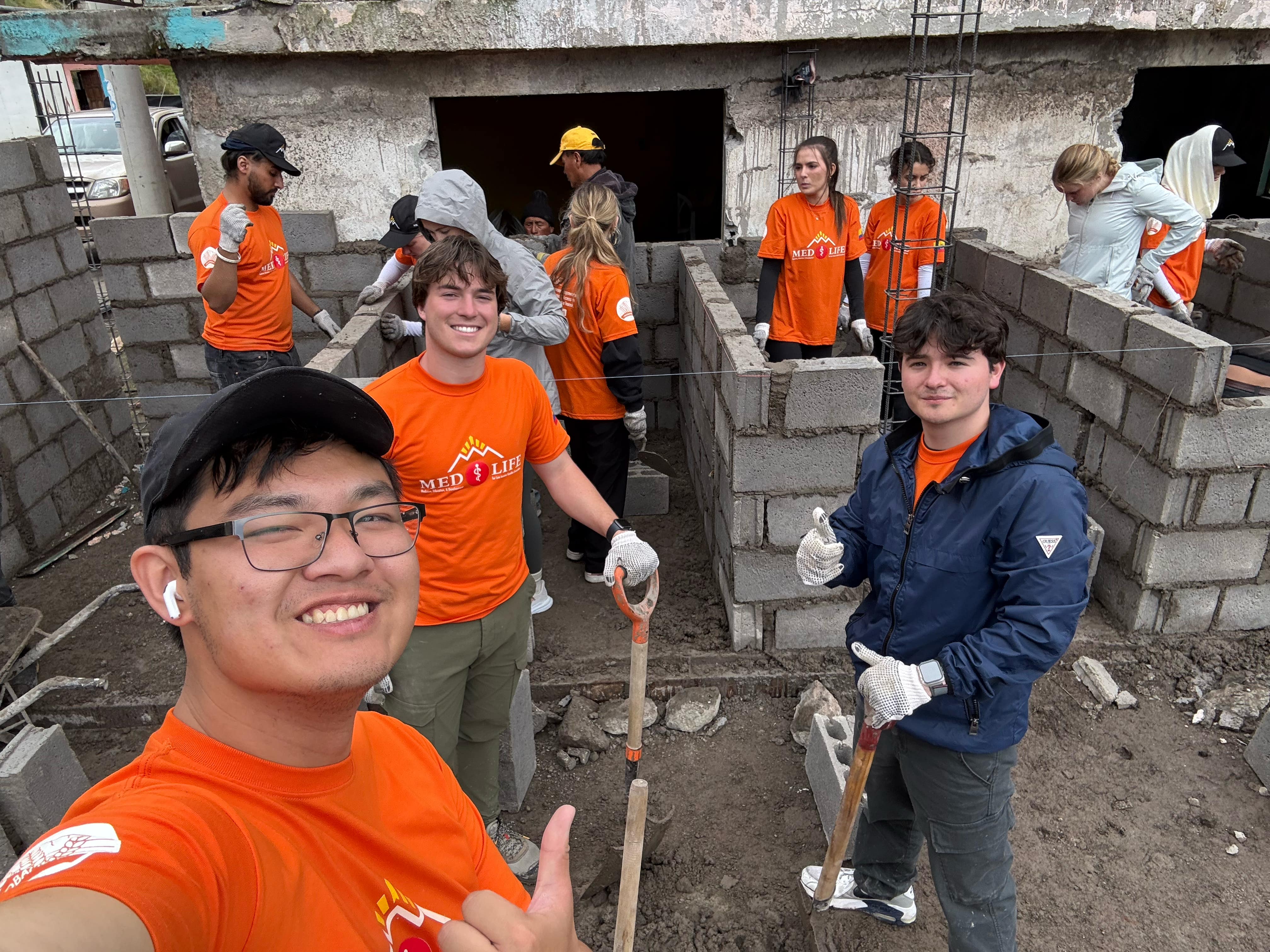
How to document a field project while you're on site
The best portfolio material is captured during the project, not reconstructed months later. Build these habits from day one.
Keep a daily log
At the end of each day, write down what the team built, what problem came up, how the local engineers or architects solved it and what you learned. Short notes are enough. The details fade fast.
Photograph the process, not just the result
| What to capture | Why it matters |
|---|---|
| The site before work begins | Shows the original problem and constraints |
| Key stages of construction | Shows sequence and method |
| Tools, materials and techniques | Shows what you learned to work with |
| Sketches or notes from briefings | Shows how decisions were explained and made |
| The finished project | Shows the outcome and how it's used |
Record your role clearly
Write down exactly what you did and under whose guidance. For example, "mixed cement and laid bricks for the staircase under the supervision of local engineers" is precise and honest. "Designed a staircase" is not, if local professionals led the design.
Document respectfully
Community projects happen in people's neighborhoods and homes. Always ask permission before photographing residents or their houses. Credit the community members and local professionals who led the work, and avoid framing families as a backdrop for your story. A portfolio that shows real partnership reads as more mature and more credible.
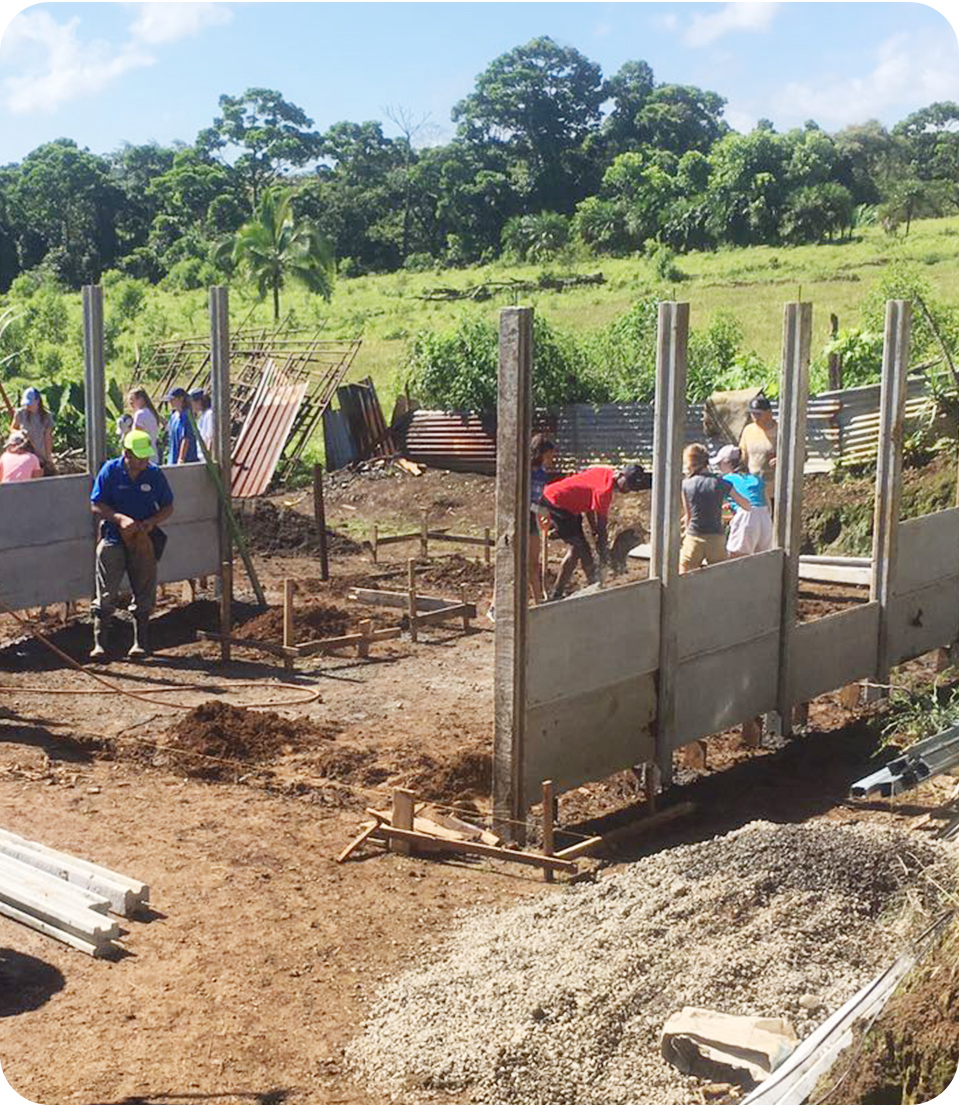
Turning field notes into a portfolio case study
Once you're home, shape each project into a short case study. A simple structure works well:
- Context: where the project took place and what need the community identified
- Problem: the technical and practical challenge
- Your role: what you did, with whom and under what supervision
- Process: key steps, decisions and constraints you observed
- Outcome: what was built and how it's being used
- Reflection: what you learned and how it connects to your studies
For example, a student who joined the staircase project in the 2 de Diciembre community in Lima could describe the unsafe slope residents used to reach school and health services, explain how the team mixed cement, laid bricks and installed handrails, and reflect on what it meant to build on unstable terrain alongside residents and local professionals.
The same notes are useful beyond your portfolio. You can adapt them to describe your volunteer experience on a resume or talk about teamwork and construction project management in an interview. If you haven't worked on a build yet, start with these volunteer construction work basics.
Where to get field experience for your portfolio
If your portfolio is light on field work, a supervised community project is one way to change that. On the development service learning trip, students work alongside community members and local architects and engineers on projects such as staircases, retaining walls, home renovations and greenhouses in Lima, Cusco and Tena. The week includes an orientation, a Reality Tour of the communities and several build days that end with an inauguration together with the community.
A portfolio won't guarantee an admission or a job offer. But it does give you concrete, honest examples to talk about, and those conversations are where field experience tends to matter most.
Start building your portfolio in the field
Field experience gives your engineering student portfolio something classes alone can't: proof of how you learn on a real site, with real constraints and real people.
Fill out the form to get dates, eligibility details and next steps for the Development Service Learning Trip.
Frequently asked questions
What should an engineering student portfolio include?
Include your strongest class projects, any internships or research, team competitions and field experience. For each project, explain the problem, your role, the process and what you learned.
Should I include volunteer construction projects in my engineering portfolio?
Yes, if you can describe them clearly and honestly. Volunteer builds show hands-on skills and teamwork. Be precise about your role and credit the professionals who supervised the work.
How many projects should an engineering student portfolio have?
There is no fixed number. Focus on quality: a few projects with clear context, process and reflection are more useful than many projects with little explanation.