


If you teach engineering, advise a student chapter or guide students through college and career planning, you have probably seen the brochures. Dozens of programs offer engineering service trips abroad, and on paper many look alike: a week of construction, a community in need, a group photo at the end.
The differences that matter are harder to spot. Who designs the project? Who supervises students on site? Did the community ask for this work? What will your students actually learn?
This guide is for teachers, professors and academic advisors evaluating a trip with a technical component. You will learn what makes engineering service trips worthwhile, six questions to ask any program before you commit, and what a typical week looks like on a Safe Homes Movement trip.
What makes engineering service trips worth the time
A well-designed engineering service trip does more than add a line to a student's resume. It connects classroom concepts to a real site, with real constraints.
Students see how terrain, budget, access and available materials shape design decisions. They work on a team that includes professionals and residents, often across a language barrier. And they see how infrastructure such as a staircase, retaining wall or classroom renovation affects daily life in a community.
For civil engineering students in particular, service trips for civil engineers offer a close look at slope work, drainage and building with local methods. For architecture and urban development students, they show how design responds to the people who use a space.
Six questions to ask before choosing an engineering service trip
1. Who designs and supervises the work?
This is the most important question. Students should never be designing or building infrastructure on their own. Look for programs where local, licensed architects and engineers lead design and supervise construction. Our article on licensed structural oversight explains why this matters.
2. Who chose the project?
Strong programs build what communities ask for. Ask how projects are selected and what role residents play. In a 50/50 model, community members identify the need and work on site alongside volunteers.
3. What will students actually do?
Ask for a realistic description of daily tasks. On construction projects, students typically help with tasks like mixing cement, laying bricks and installing handrails under professional guidance. Clear expectations help students prepare and prevent disappointment.
4. How are safety and logistics handled?
Ask about orientation, safety equipment, on-site training, transportation and staff support. Find out whether an English-speaking trip leader travels with the group.
5. Is learning built into the week?
The best trips include context, not just labor. Look for talks on project management, visits that explain the social conditions behind the project and time for reflection.
6. What stays after the group leaves?
Ask whether the organization has a long-term presence in the community and who maintains the project afterward. You can compare approaches in our post on how Safe Homes differs from mission trip programs.
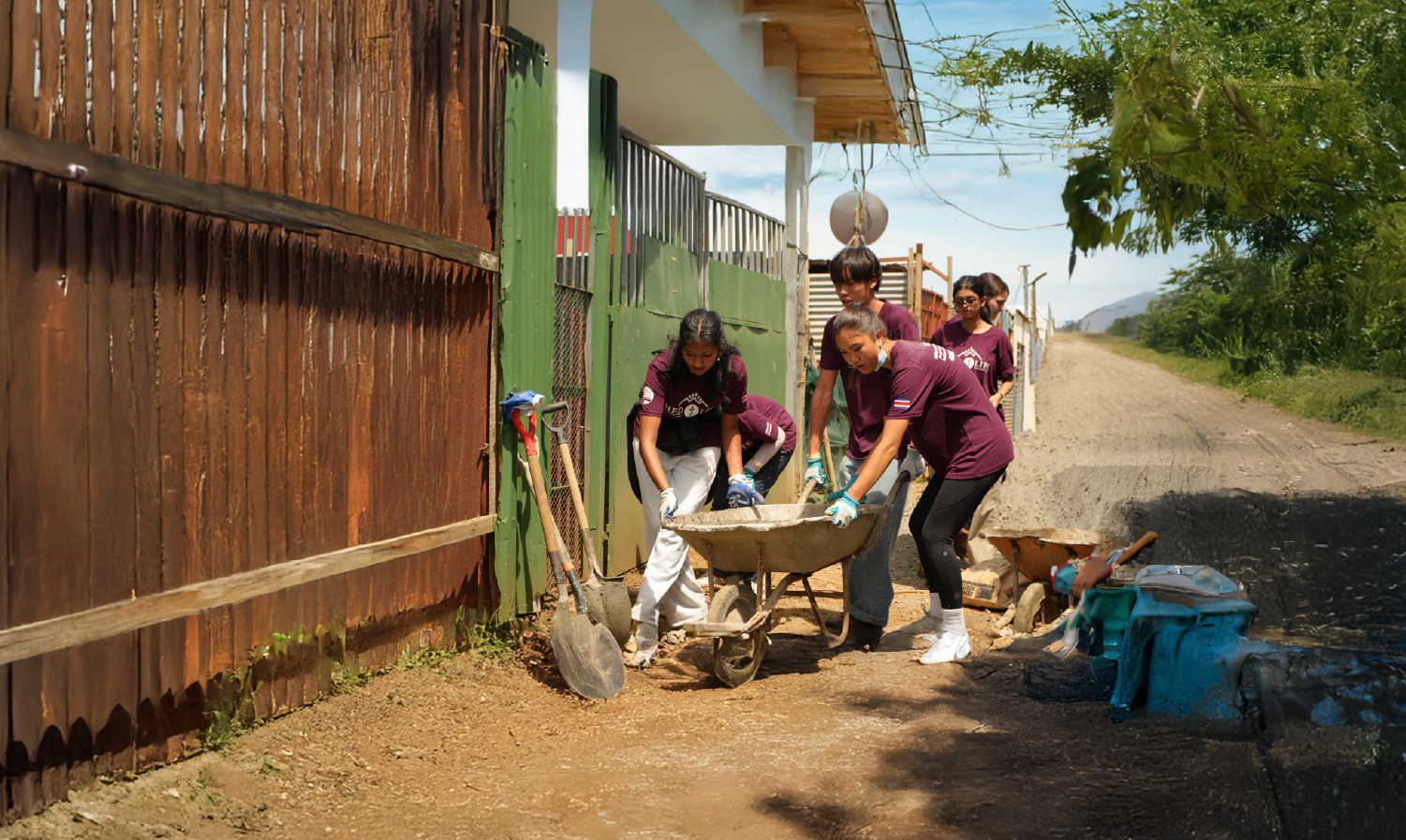
What a week looks like on Safe Homes service trips for civil engineers
Safe Homes Movement runs the development service learning trip in Lima and Cusco, Peru, and Tena, Ecuador. The program is designed for students interested in architecture, engineering and community development, who work hand in hand with local professionals and community members.
A sample week in Lima looks like this:
| Day | What happens |
|---|---|
| Arrival | Students are met at the airport and settle into the hostel |
| Orientation | Overview of the week, safety precautions and a walking tour |
| Reality Tour | A visit to the human settlements where Safe Homes works, with context on the gap between Peru's public health system and low-income families |
| Build days | Travel to the community, a brief training session, then work until early afternoon with a lunch break |
| Final build day | The project closes with an inauguration alongside the community |
| Optional day | An optional tourism activity before departure |
Lima projects have included a concrete staircase in the 2 de Diciembre community and a retaining wall in a hillside settlement. In Cusco and Tena, projects can include greenhouses, home construction and other community infrastructure. The sample Lima itinerary includes dorm accommodation, meals from Monday to Friday, transportation to project activities, an English-speaking trip leader and safety equipment.
Choosing between destinations? Our guide on how to choose your destination can help you match a location to your group's goals.
Plan a trip your students will learn from
The right engineering service trip gives students real technical exposure, a genuine partnership with the community and professionals to learn from on site.
If you are an educator or advisor exploring options for your students, fill out the form to get dates, group details and next steps for the Development Service Learning Trip.
Frequently asked questions
Are engineering service trips suitable for high school students?
Yes, when the program provides professional supervision, clear safety practices and tasks suited to volunteers. Safe Homes Movement welcomes both high school and college students.
Do students need construction experience?
No. On a well-run trip, students receive training on site and work under the guidance of local architects and engineers, so they learn as they go.
How are students supervised during the build?
On Safe Homes trips, local architects and engineers lead the design and supervise construction, while trip leaders support the group throughout the week. Students always work as part of a team with community members.