
Disaster Risk Reduction in Hillside Communities
When a disaster hits, the headlines focus on the damage. What rarely makes the news is the quiet work done years earlier: the staircase that gave families a safe way down a slope, the wall that held back loose rock, the neighborhood meeting where residents mapped which homes were most exposed. That preventive work is the heart of disaster risk reduction.
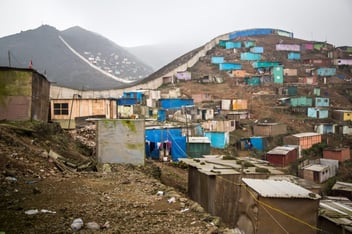
For hillside communities around Lima, where homes sit on sandy and rocky slopes in an earthquake-prone city, reducing risk before a disaster can matter more than any response after it. In this article, you will learn what disaster risk reduction means, how the global Sendai Framework organizes it and how its ideas apply to hillside neighborhoods through community-led infrastructure.
What is disaster risk reduction?
Disaster risk reduction (DRR) is the effort to prevent new risks, reduce existing ones and prepare communities to respond and recover. It starts from a simple idea: a natural hazard, like an earthquake or heavy rain, only becomes a disaster when it meets people and places that are exposed and vulnerable.
Hazard, exposure and vulnerability
| Element | What it means | Hillside example |
|---|---|---|
| Hazard | A natural event that can cause harm | Earthquakes, landslides, heavy rain |
| Exposure | People and assets in harm's way | Homes built on steep, unstable slopes |
| Vulnerability | How easily they are harmed | Self-built homes, no safe paths or walls |
Reducing any one of these lowers the overall risk. In hillside neighborhoods, the most practical place to start is often vulnerability and exposure, because those are shaped by what gets built and where.
The Sendai Framework
The leading global agreement on DRR is the Sendai Framework for Disaster Risk Reduction 2015–2030, adopted in March 2015 at a UN world conference in Sendai, Japan. According to the Australian Institute for Disaster Resilience, it sets seven global targets and four priorities for action:
- Understanding disaster risk
- Strengthening disaster risk governance to manage disaster risk
- Investing in disaster risk reduction for resilience
- Enhancing disaster preparedness for effective response, and to "Build Back Better" in recovery
Disaster risk reduction in Lima's hillside communities
Understanding the risk
Lima faces earthquakes and, in some years, heavy rain linked to El Niño. Our article on El Niño in Lima's settlements explains how these events affect hillside neighborhoods. Many homes are self-built: a CAPECO study, reported by Actualidad Ambiental, found that 7 out of 10 homes in Lima are informal, and that risk doubles on sandy areas and hillsides.
Governance and recognition
Communities without land titles often struggle to access public services and investment. Organized neighborhood committees, working with local authorities, play a key role in deciding what gets built and where.
Investing in infrastructure
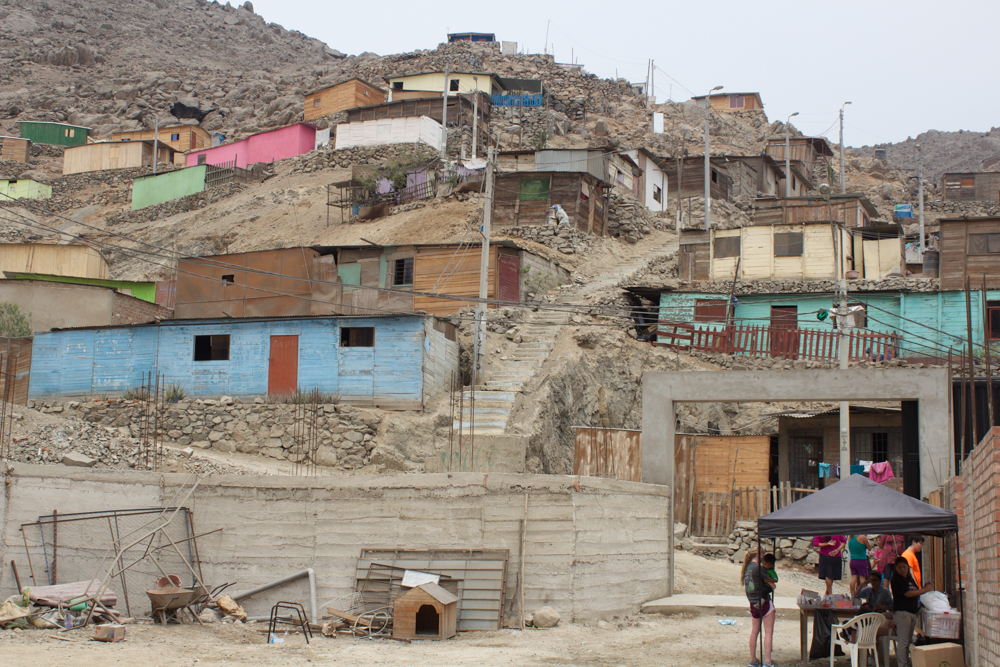
This is where DRR becomes concrete. Staircases replace dangerous dirt paths, retaining walls help hold back loose soil and rock, and safer homes reduce vulnerability. Each project lowers exposure or vulnerability for the families who use it every day. Learn how neighborhoods change over time in shantytowns in transition.
Preparedness
Safe evacuation routes matter in an emergency. On a steep hillside, a staircase with handrails can be the difference between reaching safety quickly or not at all. Our article on what makes a community safe explores how infrastructure and social ties work together.
Community-led disaster risk reduction with Safe Homes
Safe Homes Movement, powered by MEDLIFE, works with hillside communities in Lima on the infrastructure they prioritize. Every project follows a 50/50 model: residents identify the need and work on site, and local architects and engineers lead the design and supervise construction. That approach reflects a central DRR lesson: the people living with the risk understand it best.
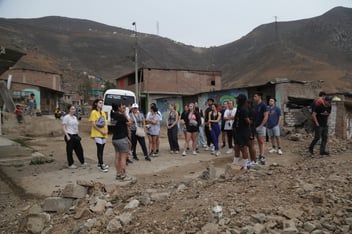
For students in engineering, architecture and urban development, these projects show DRR in practice. On the development service learning trip, students take a Reality Tour of the settlements and then work alongside residents and local professionals in Lima, Cusco and Tena. Trips run in summer, winter and spring.
Help reduce risk where it starts
Disaster risk reduction happens long before a disaster, in the paths, walls and homes communities build together.
Fill out the form to get dates, eligibility details and next steps for the Development Service Learning Trip.
Frequently asked questions
What is disaster risk reduction?
Disaster risk reduction is the effort to prevent new risks, reduce existing ones and prepare communities to respond and recover from hazards such as earthquakes, floods and landslides.
What are the four priorities of the Sendai Framework?
Understanding disaster risk, strengthening disaster risk governance, investing in disaster risk reduction for resilience, and enhancing preparedness for effective response and to "Build Back Better" in recovery.
How does infrastructure reduce disaster risk?
Infrastructure like staircases, retaining walls and safer homes reduces how exposed and vulnerable people are to hazards, and can provide safer evacuation routes during emergencies.