

Construction Management Degree: What to Expect
Every building, bridge and hillside staircase starts as a drawing. Getting from that drawing to a finished structure takes someone who can plan the work, manage the budget, coordinate crews and keep everyone safe. That is the job a construction management degree prepares you for. If you like being where design meets the real world, and you're as interested in people and schedules as in materials, this path may fit you well.
In this article, you'll learn what a construction management degree covers, how accredited programs work, which skills you'll build in class and on site, and how students can get early field experience before their first job. You'll also see how construction management connects to community projects where local professionals and residents build together.
What is a construction management degree?
A construction management degree trains you to plan and run construction projects from start to finish. According to the U.S. Bureau of Labor Statistics, construction managers "plan, coordinate, budget, and supervise construction projects from start to finish." The same source notes that they typically need a bachelor's degree in construction, business, engineering or a related field, and that some earn an associate's degree in construction management or construction technology.
How it differs from engineering and architecture
Architects focus on design and how people use a space. Civil engineers focus on analysis and making sure structures are safe. Construction management sits between them and the job site: turning approved plans into a sequence of tasks, contracts, deliveries and inspections that actually gets built.
Accreditation to look for
In the United States, many construction programs are accredited by the American Council for Construction Education (ACCE). ACCE accredits academic programs, not people: it isn't a personal license for construction managers. As one example, the University of Florida's Rinker School notes that its own program has held ACCE accreditation since 1974. ACCE reviews both four-year bachelor's programs and two-year associate programs, and some programs housed in engineering schools may also hold engineering accreditation. Accreditation dates and status differ from school to school, so when comparing options, check each program's accreditation page directly.
What you study in a construction management degree
Course names vary by school, but most programs combine technical, business and field topics:
| Area | Typical topics |
|---|---|
| Building technology | Materials, methods, structures basics, building systems |
| Planning and control | Scheduling, estimating, cost control |
| Business and law | Contracts, risk, procurement, accounting |
| Safety | Site safety practices and regulations |
| Communication | Reports, presentations, coordinating with owners and crews |
Skills that matter on site
Classroom knowledge is only part of the job. Construction managers spend much of their day solving problems with other people: a delivery arrives late, a drawing doesn't match field conditions, a crew needs a decision now. Programs that include site visits, internships, capstone projects or field courses help you practice those decisions before the stakes are high.
You can see how project management works in practice in our article on mastering construction project management through volunteering.
How to build experience before you graduate
Employers often look for evidence that you understand how a site really works. A few ways students build that experience:
- Internships and co-ops with builders, owners or public agencies
- Student competitions and clubs connected to construction programs
- Part-time site work during school breaks
- Supervised field projects, including community construction abroad
Learning from community projects
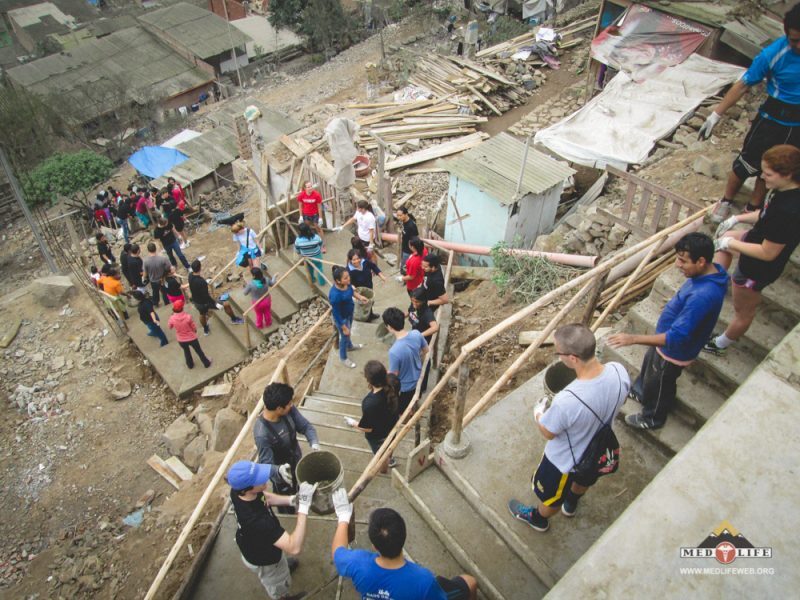
Community construction shows the same core challenges as any project, but often with tighter budgets, difficult access and materials that have to be carried by hand. Safe Homes Movement, powered by MEDLIFE, runs the development service learning trip in Lima, Cusco and Tena during summer, winter and spring. Over about a week, students spend four to five days of supervised field work, building alongside residents and local professionals on projects such as staircases, retaining walls, greenhouses in Cusco and home construction. Local architects, engineers and community leaders guide volunteers throughout, and safety equipment is included.
Safe Homes doesn't offer internships, and the trip isn't a substitute for one. What it adds is a close look at sequencing, coordination and teamwork on a real site, alongside the residents who identified the need. Our guide on volunteer construction work explains what to expect before your first build, and this article covers how field experience can relate to construction jobs.
No degree, internship or trip guarantees a job offer. But a clear record of field experience gives you real examples to talk about in interviews.
Start building site experience now
A construction management degree gives you the tools to plan and lead projects. Field experience shows you how those tools work when real people, real ground and real deadlines meet.
Fill out the form to get dates, eligibility details and next steps for the Development Service Learning Trip.
Frequently asked questions
What can you do with a construction management degree?
Graduates often work as assistant project managers, project engineers, estimators, schedulers or field coordinators for builders, owners and public agencies. Roles vary by employer and region.
Is a construction management degree accredited?
Many U.S. bachelor's and associate programs are accredited by the American Council for Construction Education (ACCE). Check each school's accreditation page for current status.
Do you need site experience during a construction management degree?
Most programs encourage it through internships, co-ops, field courses or capstones. Site experience helps you connect coursework with how projects actually run.