

Community Service Hours: What Counts and How to Log Them
Many high school students hear about community service hours long before they understand what they're for. A graduation requirement, an honor society, a club or a scholarship form asks for a number, and suddenly you're hunting for a supervisor's signature from an event you barely remember. The hours matter, but so does the record behind them and the experience they describe.
In this article, you will learn what usually counts as community service, how to log and verify your hours so they hold up when someone checks, and how to choose service that builds real skills. You'll also see how a supervised construction project abroad can fit into your service record when your school or program accepts it.
What usually counts as community service hours
Every school, district and organization sets its own rules, so the first step is always to read the policy that applies to you. Still, most policies share a few common ideas.
Unpaid work that benefits others
Community service is generally unpaid work for a nonprofit, school, public agency or community group. Work you're paid for, or tasks that mainly benefit your family or a business, usually don't count.
Supervised by a responsible adult
Most programs ask for a supervisor who is not a relative and who can confirm what you did. That person's name, role and contact information are what make your hours credible.
Activities that commonly qualify
| Often accepted | Often not accepted |
|---|---|
| Volunteering with a nonprofit or school program | Paid jobs or internships |
| Tutoring, mentoring or coaching younger students | Chores at home or helping relatives |
| Building, repairing or cleaning community spaces | Activities done mainly for a grade |
| Organized service trips with a recognized organization | Service you can't document or verify |
Policies differ on service trips, religious activities and work done outside your country, so ask your counselor before you count them. As one example, the Montgomery County Public Schools student service learning guide sets its own rules on approved activities, supervision and documentation. Other districts and colleges set different ones, so treat any list like the table above as a starting point, not a guarantee.
How to log community service hours correctly
A clear log saves you stress later and makes your experience easier to describe on applications.
Record each session right away
For every activity, write down:
- Date and time: start and end times, not just a total
- Organization: the full name and location
- Supervisor: name, role, email or phone
- Tasks: what you actually did, in one or two specific sentences
- What you learned: a short note while it's fresh
Get verification as you go
Ask your supervisor to sign or confirm hours at the end of each session or project, not months later. If your school uses an online tracking system, upload entries promptly and keep your own copy.
Keep it honest
Round down, not up. Only log time you actually spent serving, and describe tasks accurately. If you worked alongside professionals, say so. Accurate records protect you and the organizations that vouch for you. Our guide on listing volunteer experience shows how to turn those records into clear resume entries.
Choosing service that means more than a number
Hours are easier to log when the work is meaningful, and meaningful work is easier to talk about in an essay or interview.
Look for service with real responsibility
Projects where you learn a skill, work with a team and see a result tend to stay with you. Research also links volunteering with benefits for the volunteer, which we explore in our article on the health benefits of volunteering.
Consider a supervised service learning trip
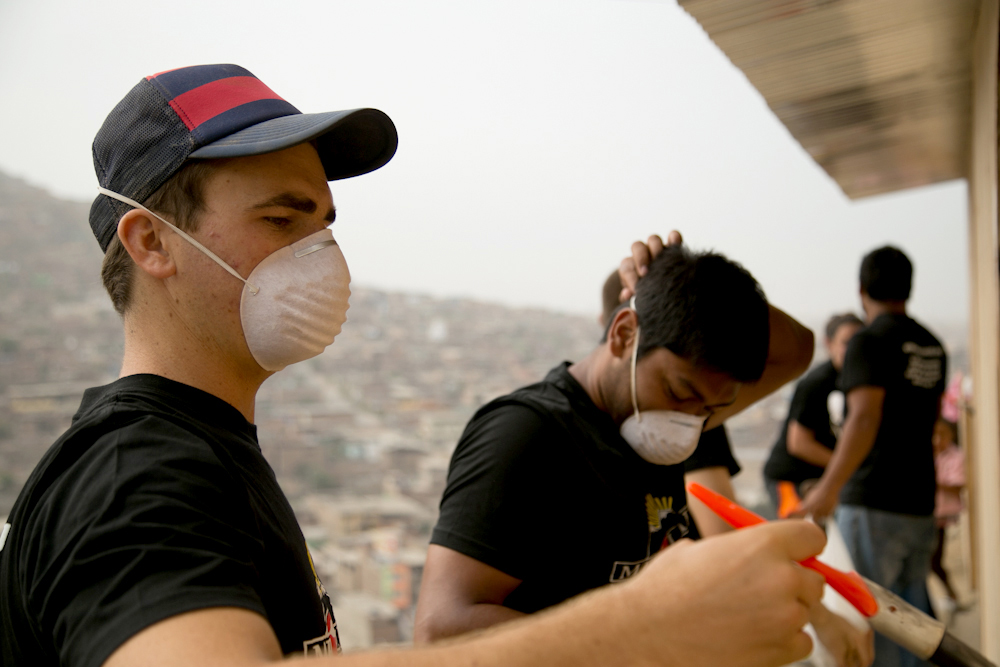
Some students add a service learning trip to their record. On the development service learning trip with Safe Homes Movement, powered by MEDLIFE, high school and college students spend about a week in Lima, Cusco or Tena, including four to five days of supervised field work. Local architects, engineers and community leaders guide volunteers throughout the project, and residents work on site as equal partners in a 50/50 model. Trips run in summer, winter and spring.
Whether trip hours count toward a specific requirement depends on your school's policy, so confirm before you go and bring your log template with you. A project like a community staircase or a home construction build gives you specific tasks to document and a supervisor who can verify them.
Reflect on what you did
A short reflection after each project helps you remember details and explain your growth. It also makes the hours themselves easier to justify, because you can say exactly what you contributed and why it mattered.
Make every hour count
Community service hours are a record of real work for real people. Log them carefully, choose service that challenges you and keep your descriptions honest.
Fill out the form to get dates, eligibility details and next steps for the Development Service Learning Trip.
Frequently asked questions
What counts as community service hours?
Usually, unpaid work for a nonprofit, school, public agency or community group, supervised by an adult who isn't a relative. Each school or program sets its own rules, so check the policy that applies to you.
How do I verify community service hours?
Keep a log with dates, times, tasks and your supervisor's contact details, and ask your supervisor to sign or confirm the hours soon after each activity. Use your school's tracking system if it has one.
Do service trips abroad count toward community service hours?
It depends on your school or program. Some accept organized trips with a recognized organization, others don't. Ask your counselor before you travel and keep a detailed log while you're there.