
On many hillsides around Lima, water doesn't come from a tap. It arrives by truck, gets stored at the bottom of the slope and then has to be carried up the steps, bucket by bucket, several times a week. For families without a connection to the city network, every liter takes time, money and physical effort. That is the problem clean water and sanitation projects are built to solve.
These projects bring water closer to homes, create safe bathrooms and reduce the daily burden that missing infrastructure places on families.
In this article, you will learn why water and sanitation are so closely tied to health and opportunity in hillside communities, how two real community-led projects in Peru and Ecuador worked, and what engineering and architecture students can learn from this kind of infrastructure.
Why clean water and sanitation projects matter
1. Living without a water connection
Many families in Lima's human settlements live outside the reach of the public water system. In communities like these, residents often depend on private water trucks. As we covered in our article on the eco-bathroom solution in Lima, families in water-scarce areas may pay up to 12 times more for water than residents of well-served neighborhoods, and its quality is not guaranteed.
Even when water arrives, it still needs to reach homes built high on steep slopes. That means hauling heavy containers uphill on unstable paths, a task that is especially hard for children, older adults and anyone with limited mobility.
2. Relation betwwen Sanitation and health
Without safe bathrooms or a sewage connection, keeping homes and schools hygienic is much harder. Poor sanitation is linked to the spread of disease, and children are especially affected when their schools lack proper facilities. You can read more about the hygiene facilities in schools that help students stay healthy and in class.
3. Link to legal recognition
Water and sanitation are also connected to land rights. In many settlements, families need legal recognition of their land before they can request public utilities like water and electricity. Permanent community infrastructure, like the staircase built in 2 de Diciembre, can support those efforts.

How community water and sanitation projects work: two examples
Safe Homes Movement is powered by MEDLIFE, which has worked alongside communities in Peru and Ecuador on water and sanitation for years. Two projects show how this work unfolds when communities lead.
Case 1: Pumping water uphill in Lima
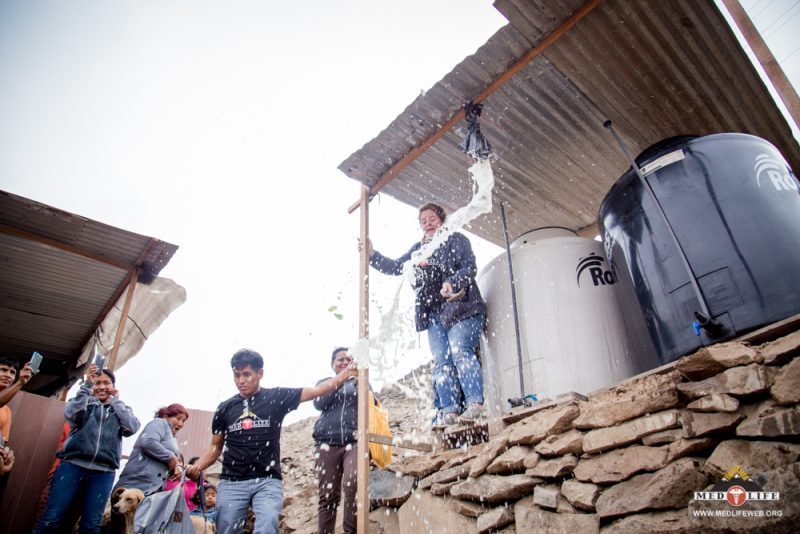
In 2017, residents of the 15A1 and 15C communities in Villa María del Triunfo, a district in southern Lima, asked for help moving water from the bottom of their hill to the top. MEDLIFE and the communities signed an agreement: MEDLIFE provided materials for the pump system, and community members set it up together.
The solution combined several elements:
- A pump system made of multiple smaller pumps
- A series of hoses carrying water up the hill
- Storage tanks at the top, each holding 1,100 liters and refilled every three to four days
- Gravity-fed distribution that delivers water from the tanks down to the homes below
Community members connected the pumps to the tanks and checked the system along the way. The result: families no longer need to carry heavy buckets up steep steps several times a week.
Case 2: School bathrooms in Ecuador
In the highland community of Galte Yaguachi, in Ecuador's Guamote region, children had no bathroom at their school. They had to walk to a nearby day care center or ask neighbors. Through the community's own work, a new set of sanitary bathrooms was completed, giving students proper facilities of their own.
Low-water solutions: eco-bathrooms
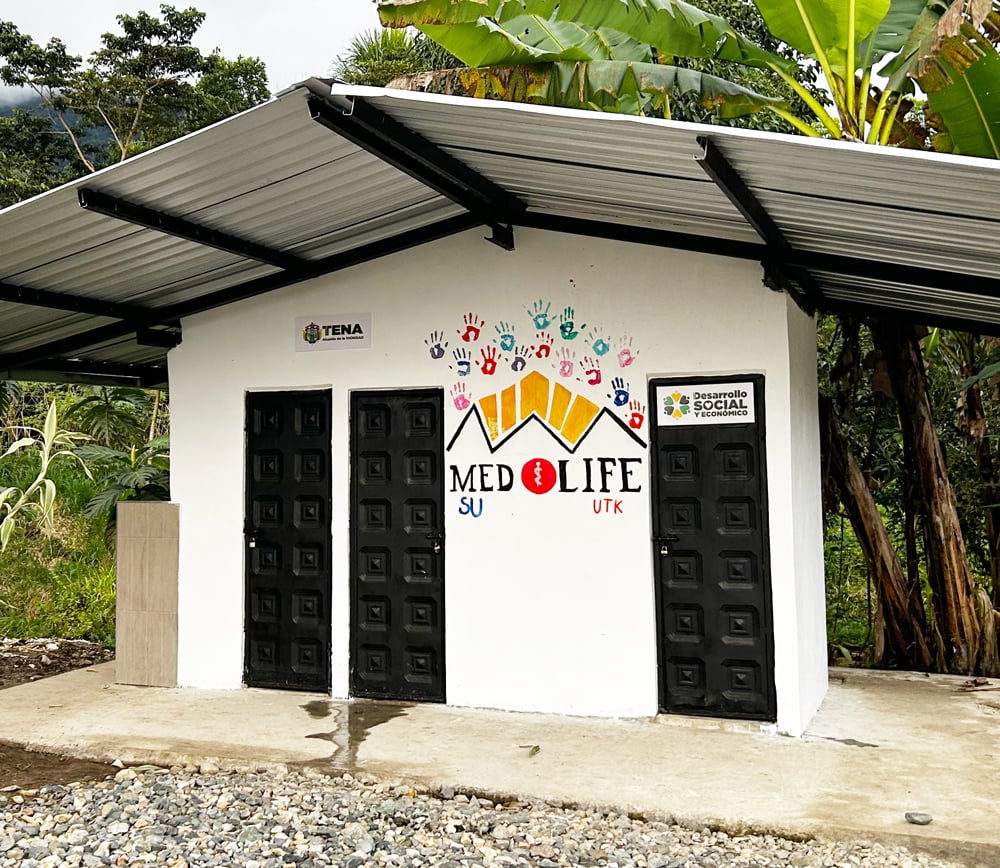
Where a sewage connection isn't possible, eco-bathrooms offer another path. These facilities don't need a connection to the city water system, use little to no water and can repurpose waste, for example as compost.
What engineering students learn from water and sanitation projects
For students in civil, environmental or sanitary engineering, these projects turn classroom concepts into decisions with real consequences. Working under the guidance of local engineers, students can see:
- Hydraulics in context: why pumping, storage and gravity distribution are combined on a steep site
- Designing for maintenance: a system only works if the community can operate and repair it
- Community agreements: how responsibilities are shared before construction begins
- Working with constraints: limited budgets, difficult access and the materials available locally
- Ownership: when residents build and maintain the system, it belongs to them
Projects change based on what each community prioritizes, so the type of build varies from trip to trip. Whatever the project, students always work alongside residents and under the supervision of local architects and engineers. To explore the bigger picture, read about South America's water resources and how the region manages them.
You can learn how students take part in these projects on our development service learning trip.
Build infrastructure that lasts in our Service Learning Trips
Clean water and sanitation projects show how infrastructure shapes health, time and opportunity. They also show what community-led engineering looks like: local professionals leading the technical work and families owning the result.
If you study engineering, architecture or community development, fill out the form to get more information about the Development Service Learning Trip in Lima, Cusco and Tena.
Frequently asked questions
What are clean water and sanitation projects?
They are community infrastructure projects that improve access to safe water and hygienic sanitation. Examples include water pumping and storage systems, distribution lines to homes, and bathrooms for schools and families.
What is an eco-bathroom?
An eco-bathroom is a sanitation facility that doesn't need a connection to the city water system. It uses little to no water and can turn waste into compost, which makes it useful in water-scarce communities.
Can engineering students volunteer on water and sanitation projects?
Yes, when a community has prioritized that kind of project. Students work alongside residents under the supervision of local engineers, who lead design and technical decisions.