
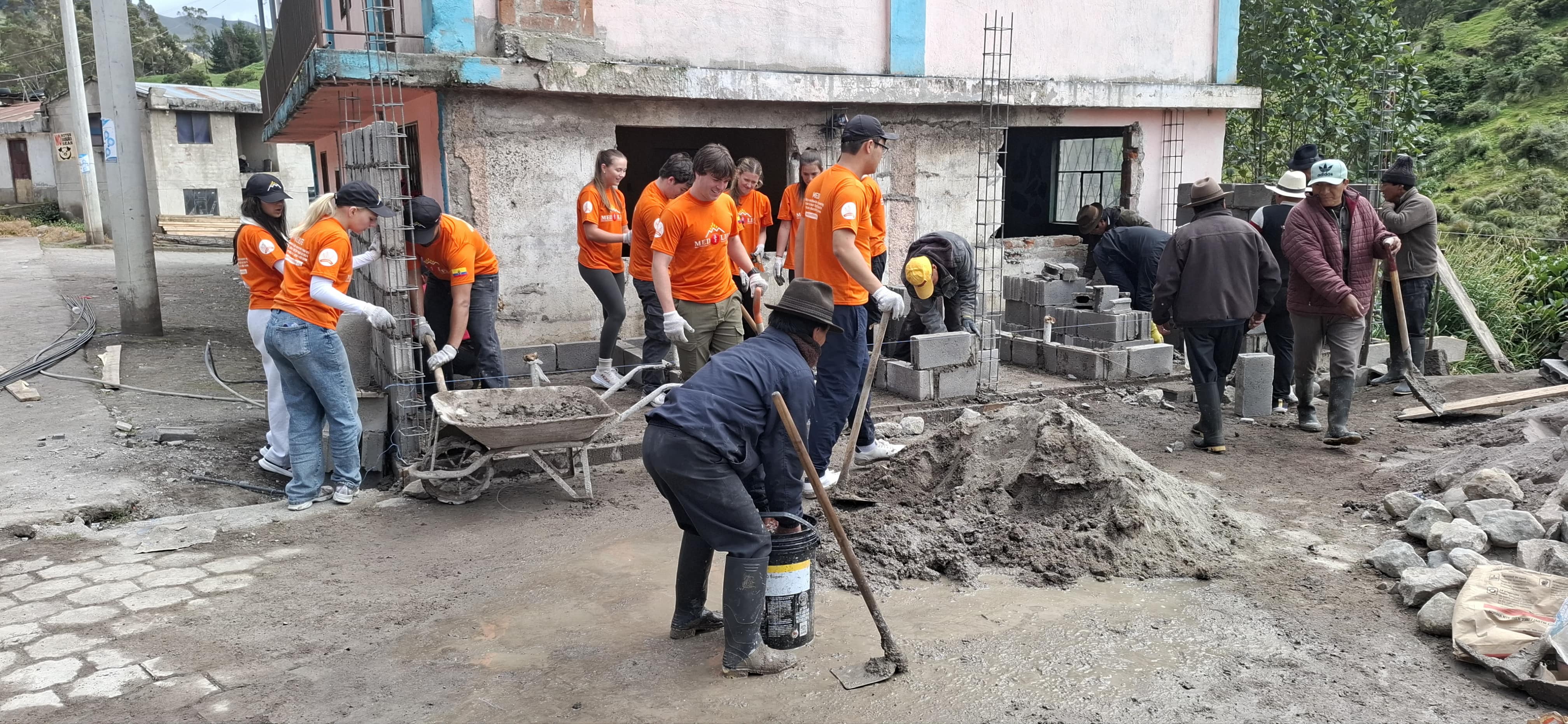
In studio, you design for a site plan and a brief. On a hillside in Lima, the "brief" is a family that needs to reach the main road safely across loose, rocky ground. Architecture volunteer opportunities abroad let you see design from that angle: as a response to real constraints, shaped by the people who will use the space. In this article, you will learn what architecture students do on community projects and the design principles behind good community infrastructure. You will also learn how to find programs where local professionals and residents lead.
In this article, you will learn:
- What role architecture students play on community projects
- Five design principles that guide community infrastructure
- How projects differ across Lima, Cusco and Tena
- What to look for in an ethical architecture volunteer program
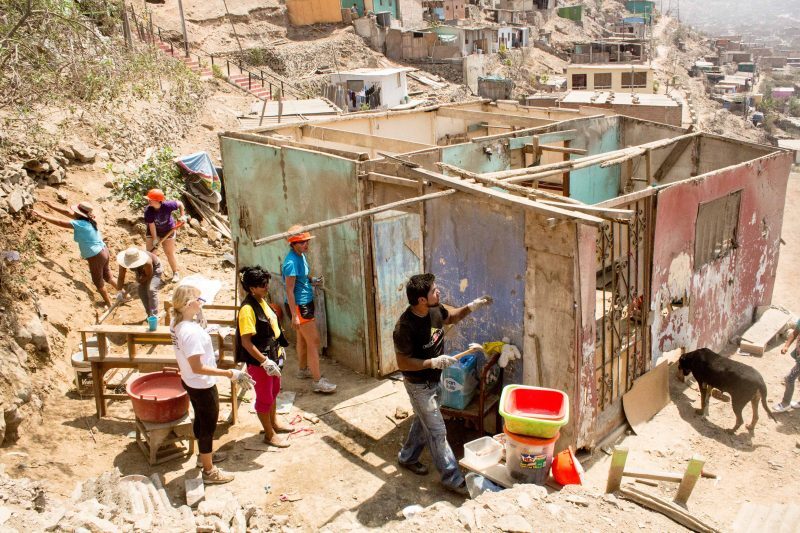
What architecture volunteer opportunities look like on the ground
Your role on site
On a responsible program, you won't arrive with a design and build it. Local architects and engineers lead the design and supervise construction. As a student, you:
- Support construction alongside residents
- Observe how professionals adapt plans to site conditions
- Ask questions about materials, structure and use
- Attend talks on project management and community context
That last point matters. Seeing how a project gets planned, approved and managed teaches you as much as the build itself. You also learn how professionals explain technical decisions to residents, a skill few studio courses cover.
Who leads the design
Community projects work best when design follows a 50/50 model:
| Partner | What they bring |
|---|---|
| Community residents | Knowledge of how the space is used daily and what is needed |
| Local architects and engineers | Technical design, regulations and site expertise |
| Student volunteers | Labor, curiosity and new questions |
Five principles of designing with communities
You'll see these principles in practice on most Safe Homes projects.
1. Start with how people live
The 2 de Diciembre staircase in Lima connected homes to routes residents already used to reach school, work and the clinic. Good community design follows existing patterns of movement instead of imposing new ones.
2. Design for everybody
Children, older adults and people with limited mobility are often the ones most affected by poor infrastructure. Features like handrails can make the difference between a usable path and a dangerous one.
3. Respond to climate and terrain
Each region asks different questions:
- Lima: steep, rocky hillsides and slope stability
- Cusco: high-altitude climate and agricultural needs, such as greenhouses
- Tena: Amazon rainforest conditions and frequent rain
4. Choose materials that last and can be maintained
Durable materials matter, and so does the community's ability to maintain them. Learn more about how we approach sustainable house construction practices.
5. Respect local identity
Design should fit the culture and history of a place. For context, read about the history of architecture in Ecuador and how tradition shapes building today.
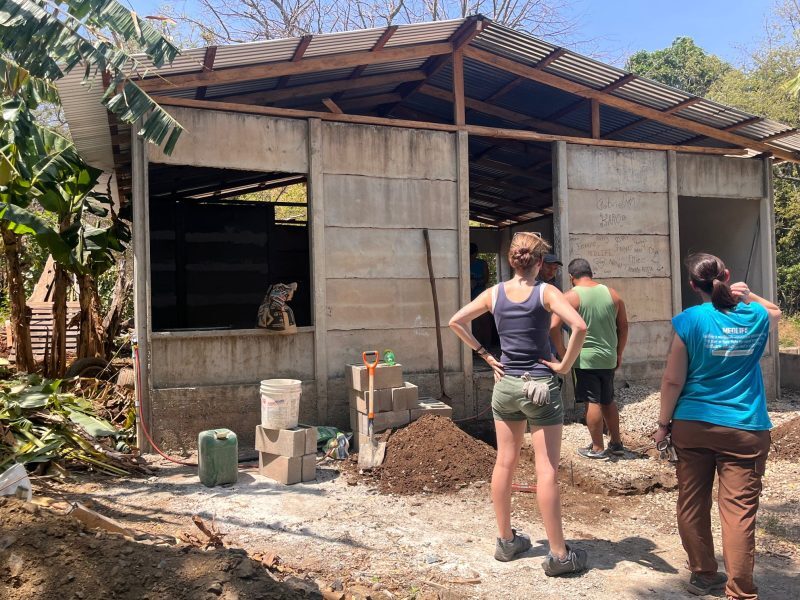
Finding the right architecture volunteer program
Before applying, ask:
- Are local architects leading the design? They should be.
- Did the community request the project? Projects should respond to needs residents identify.
- Is there structured learning? Look for talks, site briefings and reflection in addition to construction.
- Are student roles clearly defined? Students support; professionals decide.
The Development Service Learning Trip is a week-long program for students interested in architecture, engineering and community development. It includes:
- Orientation
- A Reality Tour of the communities where we work
- Several build days led by local professionals
- A closing inauguration with the community
Projects can include staircases, home renovations, public spaces and school infrastructure. If you are interested in educational spaces, see how students contribute to building schools with student skills.
Design with communities, not for them
Good design starts with listening to the people who will use the space. If you want to learn from local architects and residents on real projects in Lima, Cusco or Tena, fill out the form to get more information about the Development Service Learning Trip.
FAQ
Do architecture students design the projects?
No. Local architects and engineers design and supervise all projects. Students support construction and learn how design decisions are made and adapted in the field.
What skills will I practice?
You'll practice teamwork, hands-on construction, site observation and communication across languages and cultures. You'll also learn how project management works on a community build.
Is this experience useful for my portfolio?
It can be. You can document what you learned about site conditions and community-centered design, with the community's consent for any photos. It won't replace formal coursework or guarantee admission or employment.