


Picture a steep hillside on the edge of Lima. A family needs a safe way down to the main road, and two professionals are looking at the same slope. One asks how people will move through the space: where they rest, where children walk, how the path connects homes. The other asks what the ground can carry, where water will drain and how the structure will stay put for decades.
That is the heart of the architecture degree vs civil engineering question. Both careers shape the built environment, but they start from different questions. In this article, you will learn what each profession focuses on, how the coursework differs, which skills and interests point toward each path, and how you can watch both careers work side by side on a real community project before you commit to a major.
Architecture degree vs civil engineering: what each profession does
1. Architecture
Architects design spaces for people. Their work covers layout, light, circulation, materials, comfort and how a building or public space fits its surroundings and culture. Good design balances creativity with budget, site and the needs of daily users.
2. Civil engineering
Civil engineers design and analyze the systems that keep infrastructure safe and working. That includes structures, foundations, roads, drainage, water supply and slope stability. Their work is grounded in math and physics: loads, forces, soil behavior and how materials perform over time.
Where the two roles overlap
On most real projects, architects and engineers work as teammates.
| Question on the project | Architect's lens | Civil engineer's lens |
|---|---|---|
| Where should the path or building go? | How people use and experience the space | Whether the terrain and soil can support it |
| What should it be made of? | Look, feel, comfort and local context | Strength, durability and safety |
| What happens when it rains? | How water affects use and comfort | Drainage, erosion and pressure on structures |
| Who is it for? | Daily users, including children and elders | Everyone who depends on it staying safe |
What you study in each program
The day-to-day experience of an architecture degree and a civil engineering degree can feel very different.
Architecture programs usually center on the design studio. You develop projects over weeks, present them to reviewers and revise based on feedback. Expect courses in design, drawing and digital modeling, architectural history, building technology and environmental systems.
Civil engineering programs usually build from a foundation of calculus, physics and mechanics. From there, students move into structural analysis, geotechnical engineering, hydraulics, transportation and construction management. Much of the learning happens through problem sets, labs and technical design projects.
Both fields have professional licensing paths after graduation, and the requirements differ by country and state. If you are comparing programs, ask each school how its degree connects to licensure where you plan to work.
Which path fits your interests?
These questions can help:
- Do you get excited sketching ideas and imagining how a space will feel? Architecture may be a strong fit.
- Do you enjoy solving problems with numbers and figuring out why something works or fails? Civil engineering may suit you.
- Do you care most about people's daily experience of a place? Look closely at architecture and urban design.
- Do you want to work on water, roads, slopes and large-scale systems? Civil engineering covers that ground.
Many students land in between: sustainable design, disaster resilience and community infrastructure draw on both. You can read how engineers building resilience in South America approach earthquakes and floods, or explore the history of architecture in Ecuador to see how design responds to climate and culture.
See both careers at work on a community project
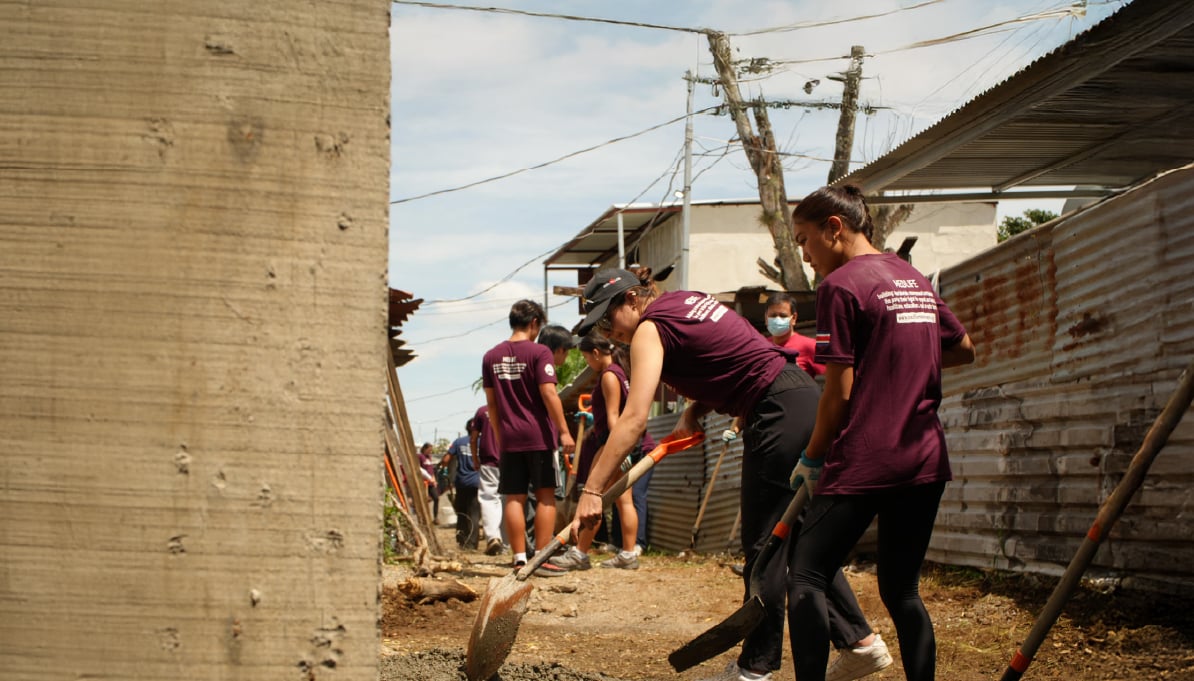
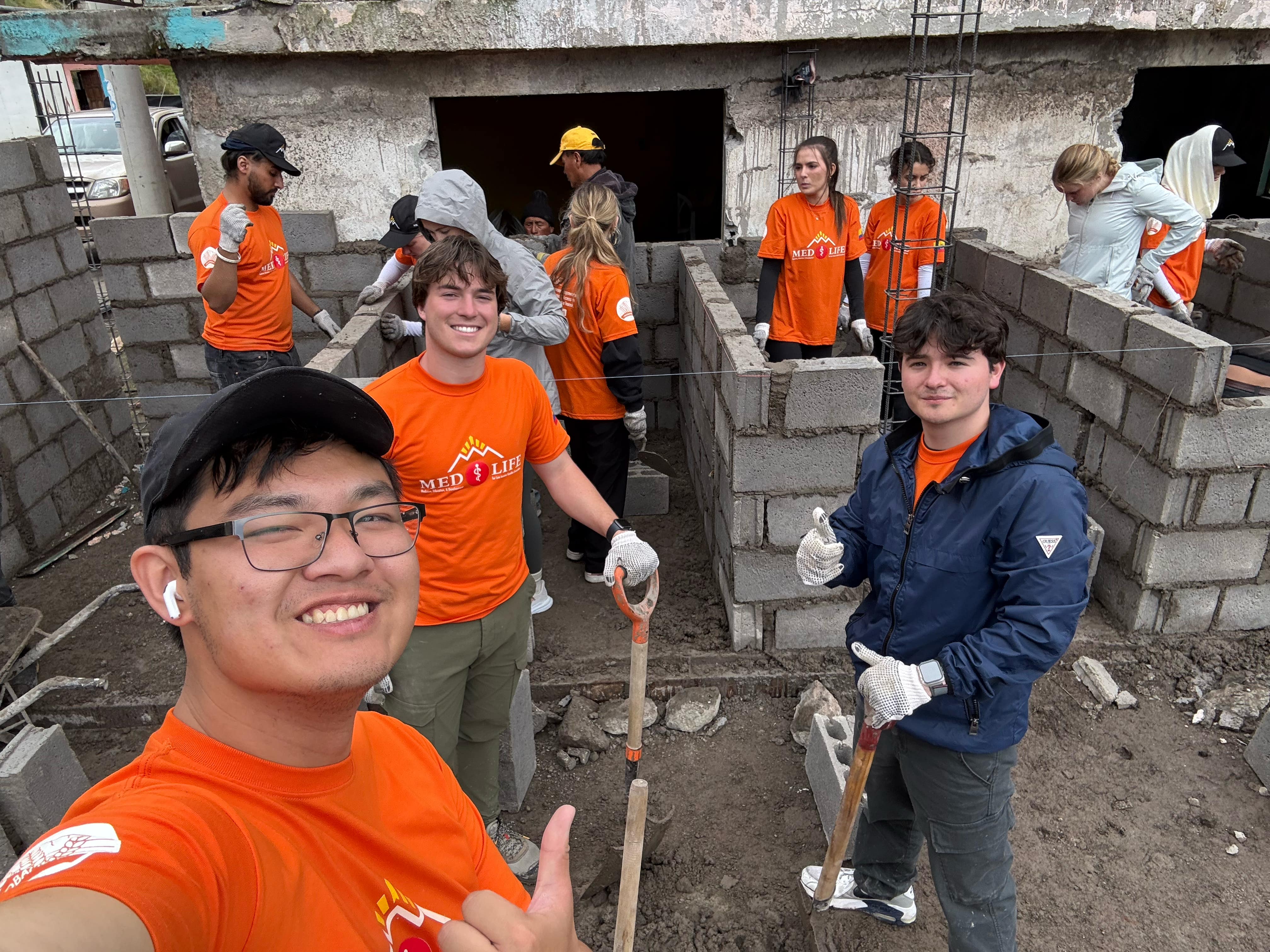
Watching architects and engineers solve a real problem together can tell you more than any course catalog. That happens on Safe Homes Movement projects in Lima, Cusco and Tena. In the 2 de Diciembre community in Lima, residents, local professionals and student volunteers built a concrete staircase on a slope that had made trips to school, work and the clinic dangerous. Students mixed cement, laid bricks and installed handrails, while local architects and engineers led the technical work.
Each project follows a 50/50 model. The community identifies the need and works on site, and local architects and engineers lead design and supervise construction. Students join that team and learn from both.
For a student deciding between majors, this is a chance to notice what pulls your attention. Are you drawn to how the staircase connects homes and where people will pause? Or to how the base is set into the slope and how water will drain? Either way, you'll gain real-world experience that sharpens your questions for universities and mentors.
You can see current options for our development service learning trip in Peru and Ecuador.
Try both paths before you choose
Choosing between an architecture degree and civil engineering is easier when you have seen both professions solve a real problem. On the Development Service Learning Trip, you work alongside local architects, engineers and community members on projects the community has prioritized in Lima, Cusco or Tena.
Fill out the form to get dates, eligibility details and next steps for the Development Service Learning Trip.
Frequently asked questions
Is architecture harder than civil engineering?
Neither is simply harder. Architecture is known for long studio hours and design critiques; civil engineering demands heavy math and physics. Ask which challenge you enjoy more.
Can a civil engineer design buildings?
Civil engineers, especially structural engineers, design the systems that keep buildings standing, such as foundations, beams and columns. Architects usually lead the overall design of how a building looks and works for people. On most projects, the two collaborate closely.
How can high school students explore architecture and civil engineering?
High school students can take related electives, talk to professionals, join summer programs or volunteer on construction projects supervised by licensed professionals. Seeing both roles on a real site is one of the clearest ways to compare them.