

Adobe Houses in Peru: Tradition and Earthquake Risk
Drive through the Andean highlands or smaller towns along Peru's coast and you'll see walls the color of the earth around them. Many are made of adobe: sun-dried blocks of mud and straw stacked into thick walls. Adobe houses have been part of Peruvian life for centuries, and they remain common today.
But in a country where strong earthquakes are a regular part of life, adobe also carries serious risk. In this article, you will learn why adobe houses are so common in Peru, what the data says about how many families live in them, why adobe performs poorly in earthquakes and how architects, engineers and communities are working toward safer homes.
Why adobe houses are so common in Peru
A long building tradition
Earth construction has deep roots in Peru, from ancient coastal cities to Andean villages. Adobe uses materials found close to home, which makes it affordable and familiar to many families who build their own houses. You can read more about how architecture and culture blend in Peru.
How many homes use adobe
According to Peru's national statistics institute, INEI, the 2017 census found that 27.9% of occupied private homes had exterior walls made mainly of adobe or tapia (rammed earth). About 55.8% used brick or concrete block.
Cost and access
For many families, adobe is simply the most accessible option, especially when they build their homes in stages over many years. Our article on cost of living in Peru explains why safe housing is often out of reach.
Adobe houses and earthquake risk
Why adobe struggles in earthquakes
Adobe walls are heavy, and earth blocks are not built to flex. A 2017 analysis by catastrophe modeling firm AIR Worldwide noted that traditional adobe offers little lateral resistance against ground shaking, and that adobe structures are considered uninsurable because of their vulnerability.
Lessons from the 2007 Pisco earthquake
The August 2007 earthquake near Pisco showed what's at stake. Peru's Geophysical Institute (IGP), citing an assessment by the national civil defense institute INDECI, reports that the earthquake left 600 people dead, 1,300 injured, 450,000 affected and 48,000 homes destroyed. The scale of those housing losses shows why construction quality matters so much in a seismic country.
| Factor | Why it matters in an earthquake |
|---|---|
| Heavy walls | Greater forces during shaking |
| Earth blocks don't flex | Walls can crack and lose strength |
| Little lateral resistance | Walls can fail when the ground moves side to side |
| Building without technical support | Common weaknesses go uncorrected |
How safer building is moving forward
Making homes safer doesn't mean ignoring tradition. It means combining local knowledge with technical support. Families understand their climate, materials and needs; professionals can help identify where a structure is most vulnerable and what changes would make the biggest difference.
- Technical guidance: architects and engineers can identify risks and recommend safer approaches
- Reinforcement and better materials: where families can afford it, stronger construction reduces risk
- Community participation: families who build their own homes need access to practical knowledge
- Design for the region: solutions must fit climate, culture and budget, including the cold nights of the highlands and the humidity of the Amazon
Researchers and engineers across Latin America work on these challenges. Our article on resilient architecture explores designing for natural disasters in South America.
Learning on real projects
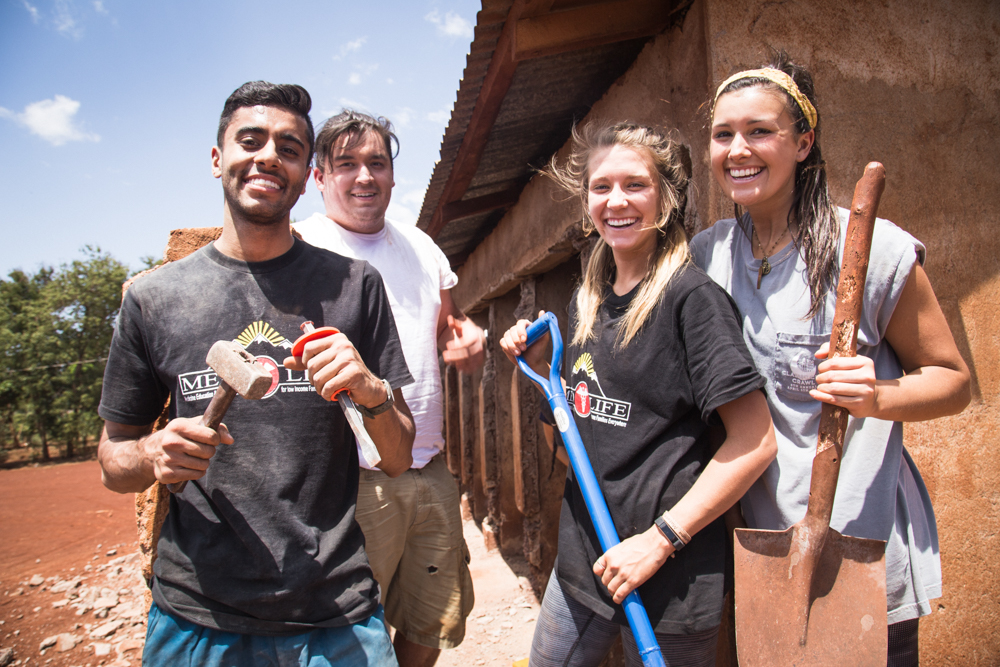
Safe Homes Movement, powered by MEDLIFE, works with communities on home construction, renovation and infrastructure such as staircases and retaining walls. Every project follows a 50/50 model: residents identify the need and work on site, while local architects and engineers lead the design and supervise construction.
On the development service learning trip, high school and college students join these projects in Lima, Cusco and Tena during summer, winter or spring. For students in architecture and engineering, it's a chance to see how building traditions, risk and design meet in real communities, and to learn from professionals who work with these challenges every day.
See how homes are built, and rebuilt, safer
Adobe houses tell a story of tradition, resourcefulness and risk. Understanding that story on the ground, alongside local professionals and families, changes how you think about safe housing.
Fill out the form to get dates, eligibility details and next steps for the Development Service Learning Trip.
Frequently asked questions
What are adobe houses made of?
Adobe houses are built with sun-dried blocks made from earth, water and often straw or other natural fibers. The blocks are stacked to form thick walls.
How common are adobe houses in Peru?
According to INEI's 2017 census, 27.9% of occupied private homes in Peru had exterior walls made mainly of adobe or tapia.
Are adobe houses safe in earthquakes?
Traditional adobe houses are highly vulnerable in earthquakes because the walls are heavy and offer little resistance to side-to-side shaking. Technical guidance and stronger construction can reduce the risk.